How to Use a Stihl Chainsaw Sharpener: Safe Sharpening Guide
Learn how to use a Stihl chainsaw sharpener safely and effectively with a step-by-step approach. Prepare, align, sharpen, and verify tension after sharpening, following Chainsaw Manual's safety-first guidance.


Mastering how to use stihl chainsaw sharpener begins with safe setup, correct angle guidance, and precise filing. This quick guide covers prep, sharpening, and post-checks to restore cutting efficiency while reducing kickback risk. Whether you’re a homeowner or pro, these steps help you achieve consistent, sharp edges.
Understanding the Stihl Chainsaw Sharpener
A sharp chain is the heart of efficient cutting. The Stihl chainsaw sharpener is designed to restore tooth geometry quickly, but consistent results come from understanding how the tool interacts with your chain. In this section you’ll learn the basics, including how a sharpener maintains the standard filing angle, the relationship between drive links and cutters, and why uniform sharpening matters for even bite and chain life. When you ask how to use stihl chainsaw sharpener, the first thing to know is that success hinges on proper setup, a clean chain, and a stable work surface. According to Chainsaw Manual, starting with a clean chain and a secured bar makes the difference between a passable edge and a true, sharp chain. With the right approach, you can bring dull cutters back to life without removing material you don’t intend to lose.
Safety and Preparation Before Sharpening
Safety is non negotiable when working with chainsaws. Put on eye protection, cut-resistant gloves, and hearing protection if you’re using powered sharpeners. Ensure the saw is off, cooled, and disconnected from any power source; engage the chain brake; immobilize the bar with a vise or clamps. Clean the chain to remove sap, dirt, and burrs that can affect sharpening. This is the moment to verify the chain pitch and gauge, so you know you’ll use the proper sharpening angle and file size. Chainsaw Manual emphasizes that a stable, well-lit workspace reduces the risk of slips and misalignment, and that a dull edge should be addressed with care rather than rushed. It also notes that keeping joints clean and free of debris helps maintain even wear on each tooth.
Setting Up Your Sharpener: Angles, Depth, and Alignment
Setting up the sharpener correctly is the most consequential step. Ensure the sharpener is compatible with your chain pitch and gauge, then attach its guide so it sits square to the tooth. Use the sharpener’s built‑in angle gauge to align each cutter with the corresponding tooth geometry. Depth gauges must be checked and set to the manufacturer’s specification before you begin to avoid cutting too deep or too shallow. A well‑adjusted setup prevents uneven sharpening that leads to accelerated wear or uneven bite. According to Chainsaw Manual, taking a few extra minutes here pays off with fewer passes and a cleaner edge.
Sharpening a Chain: A Practical Workflow
With setup complete, you’ll proceed through a deliberate workflow that preserves chain life. Start with the first cutter on the accessible side, then repeat on each tooth in the same sequence to maintain height balance. Apply light, consistent pressure as you file or grind, and take care to keep the same number of strokes per tooth on both sides. Periodically wipe away filings to check progress and maintain consistent feedback. After you sharpen a tooth, verify that the edge sits evenly with its neighbors; small deviations can compound across the chain if left unchecked. The goal is a uniform edge profile across all cutters, not a single oversized tooth. Keeping the guide aligned is essential for predictable results and safer operation.
Finishing Checks and Maintenance
Finish by deburring rough edges and cleaning the chain thoroughly. Recheck tension after sharpening because sharper teeth can slightly alter chain height. If the depth gauges were touched during sharpening, reset them to the recommended height to ensure safe cutting depth. Oil the bar and chain lightly to reduce friction in the next start-up, then reinstall the chain on the bar, ensuring proper tension. Finally, test cut on a soft log or scrap wood to confirm even bite and predictable performance. A well-maintained sharpener and chain deliver smoother cuts and reduced kickback risk.
Common Mistakes to Avoid
Mistakes are common for beginners. Don’t rush the process; rushing causes uneven teeth and over- or under-sharpening. Avoid grinding or filing more than necessary—excess metal removal shortens chain life. Do not ignore safety gear or work in a cluttered space, which increases the chance of slips. Finally, neglecting post-job maintenance, such as cleaning and re-lubricating the chain, invites oxidation and reduced performance over time.
],
mainTopicQuery:
mainTopicQuery
mainTopicQuery??? 0]},
Tools & Materials
- Stihl chainsaw sharpener(Ensure compatibility with your chain pitch and gauge.)
- Sharpening file guide(Includes appropriate file sizes for your chain.)
- Replacement files(Keep spares for wear. Verify compatibility.)
- Depth gauge tool(Used to set knife depth after sharpening.)
- Hex wrench or screwdriver(For clamps and fasteners on the sharpener or bar cover.)
- Protective eyewear(Safety glasses or goggles to protect eyes from filings.)
- Cut-resistant gloves(Grip and hand protection during sharpening.)
- Rags or brush(For cleaning filings and debris.)
- Bar oil(Lubricate chain and bar after sharpening.)
Steps
Estimated time: 25-40 minutes
- 1
Secure and prepare the saw
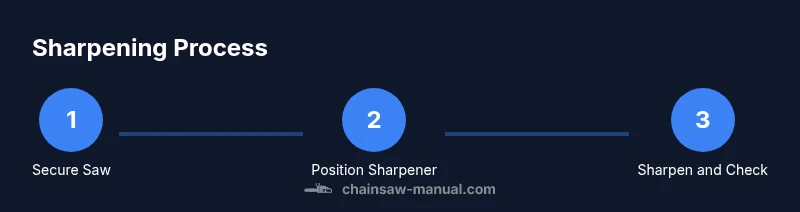
Place the saw on a stable, non-slip surface and engage the chain brake. Ensure the engine/spark plug is off and the chain is relaxed. Use a vise or clamps to immobilize the bar if available, and set aside a clean work area to prevent debris from entering the saw housing.
Tip: Lock the bar in a vise and apply a non-slip mat to prevent movement. - 2
Inspect the chain condition
Check for damaged, bent, or cracked teeth and verify drive links. Mark dull cutters to ensure you sharpen every tooth evenly. If any tooth is severely worn, consider replacing the chain.
Tip: Only sharpen teeth that are in good condition; discard a chain with significant damage. - 3
Position the sharpener against the first tooth
Align the sharpener’s guide with the reference tooth on the outer edge. Make sure the tool sits flush against the tooth and the guide sits square to the chain. Misalignment here will be amplified with every stroke.
Tip: Take your time to verify alignment before making the first stroke. - 4
Set the sharpening angle and depth
Use the sharpener’s built‑in angle gauge or the adjustable guide to set the correct angle for the cutters. Check the depth gauge setting to ensure you’re not removing too much material.
Tip: Double-check angle after the initial strokes; a small deviation can affect multiple teeth. - 5
Sharpen the first tooth
Sharpen the leading edge with light, steady strokes in one direction. Stop once you feel a clean edge and a subtle tooth height—avoid over‑sharpening the first tooth.
Tip: Keep strokes short and controlled to prevent uneven wear. - 6
Repeat on remaining teeth on the same side
Proceed to each tooth on the same flank, maintaining consistent pressure and count per tooth. This helps maintain uniform edge height across the chain.
Tip: Count strokes or take notes to ensure uniformity. - 7
Balance by sharpening the opposite side
Switch to the opposite flank and repeat the same number of strokes per tooth. Balancing sides reduces uneven bite and improves cutting performance.
Tip: Keep close to the tooth line; avoid skewing the edge. - 8
Check depth gauges and adjust if needed
Inspect depth gauges and file down as necessary to the recommended height. Uniform depth across cutters ensures safe and predictable cutting depth.
Tip: Depth gauges should be visible by a small margin above the tooth surface. - 9
Reassemble, tension, and test cut
Reinstall the chain, re-tension according to the manufacturer’s spec, and perform a test cut in a soft log. Look for even bite and steady cutting without pulling to one side.
Tip: If the test cut drags or pulls, recheck tension and tooth balance.
FAQ
Can I sharpen a chain without removing it from the bar?
Some sharpeners allow on-bar sharpening, but many setups work best with the chain removed to access every cutter. Always follow your sharpener’s manual and safety guidelines.
Some sharpeners let you sharpen on the bar, but you’ll often get better results if you remove the chain and sharpen each tooth evenly.
How often should you sharpen a chainsaw chain?
Sharpen when you notice dull cutting or increased effort. Regular checks help maintain performance and reduce kickback risk.
Sharpen when cutting feels harder or you see slower progress; regular checks keep performance steady.
What determines the correct sharpening angle?
The angle depends on the chain pitch and gauge; use the sharpener’s angle guide and the chain’s specifications for accuracy.
Angle depends on the chain you’re using; refer to the guide on your sharpener and the chain’s pitch and gauge.
Is it possible to over-sharpen a chain?
Yes. Over-sharpening removes excess metal, weakens teeth, and shortens chain life. Stop once teeth are balanced and sharp.
Over-sharpening can weaken teeth and shorten the chain’s life; stop when you’ve achieved a balanced, sharp edge.
What are common signs of a dull chain?
Increased cutting effort, smoke, and the saw pulling to one side are typical signs of dull cutters. Inspect and sharpen as needed.
If cutting is hard, the saw pulls to one side, or you see smoke, the chain is likely dull.
Should I maintain depth gauges after sharpening?
Yes. Check depth gauges and re-establish the correct height after sharpening to ensure safe cutting depth.
Yes—depth gauges matter for safe cutting depth; recheck them after sharpening.
Watch Video
The Essentials
- Secure the saw and workspace before sharpening.
- Keep sharpening angles consistent across all teeth.
- Recheck depth gauges and tension after sharpening.
- Test-cut on soft wood to confirm a balanced edge.