How to Chainsaw Carve an Owl: Safe Step-by-Step Guide
Learn how to chainsaw carve an owl with a safety-first approach. This educational guide covers setup, carving sequences, finishing, and inspection for durable, decorative wildlife art.


This guide helps you learn how to chainsaw carve an owl with a safety-first approach, covering setup, carving sequence, finishing, and inspection. Expect clear steps, PPE recommendations, and practical tips to minimize risk and improve accuracy.
Safety groundwork before any carving
Before you pick up the chainsaw, develop a safety-first mindset. If you’re wondering how to chainsaw carve an owl, safety must come first: wear PPE, inspect the tool, clear the workspace, and plan your cuts. Chainsaw Manual emphasizes verifying chain tension, using a low-recoil stance, and keeping a clear escape path. A stable blank and proper grip reduce kickback risk and improve accuracy. In this craft, safety isn't optional—it's the foundation of every successful carving. Stay mindful of your surroundings, especially while working with powerful equipment and moving wood chips. Consistent safety checks throughout the process protect you and those nearby while preserving your carving’s integrity.
Tools and materials you’ll need
Gather all items before starting to minimize interruptions. A well-prepared toolbox reduces improvisation mistakes and keeps you focused on the carving itself. See the Tools/Materials section for specifics, but you should plan for a sharp chain, protective gear, a stable work setup, and reference materials to guide proportions. A calm, well-lit workspace helps you notice subtle shape cues and avoid overcutting. In short, preparation is the quiet edge that makes the difference between a rough mock-up and a refined owl sculpture.
Understanding owl anatomy and design
An owl sculpture emphasizes a rounded head, prominent eyes, a short beak, and wing shapes that suggest feather layers without crowding the silhouette. Visualize proportions by sketching an oval for the head, a larger rounded body, and wings that wrap gently against the sides. Texture can be implied with shallow cuts and careful layering rather than heavy chipping. When you’re planning the design, consider the viewing angle—eye placement and beak orientation should read clearly from the front while remaining believable from the side. A good design balances bold silhouette with subtle feather cues.
Carving workflow: from rough form to refined features
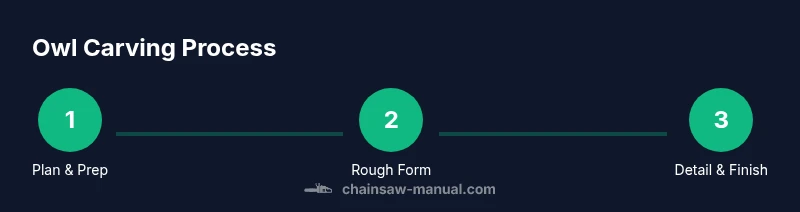
The core of learning how to chainsaw carve an owl is to move from bold mass to delicate detail. Start with rough silhouettes to establish the overall proportions, then progressively carve smaller volumes for the head, wings, and tail. Keep cuts shallow when refining the eyes and beak to avoid removing too much material. Transition from large-diameter passes to finer detailing as the form begins to take shape. Regularly step back to assess symmetry and balance, correcting course early to prevent uneven lobes that are hard to fix later. This phased approach helps you maintain control while achieving a natural, expressive owl.
Finishing touches and preservation
Finishing is about smoothing edges, defining contours, and protecting the wood from moisture and cracking. Lightly sand low spots, refine feather textures with micro-cuts, and ensure there are no loose fibers that can catch a sleeve or tool. Apply a finish suitable for outdoor exposure if the piece will live outside; a penetrating sealant can help protect against moisture and sun. Cleaning the carving before sealing ensures a long-lasting finish with even penetration. Proper sealing helps preserve color and detail while reducing the risk of warping over time.
Common mistakes and how to avoid them
Common errors include overcutting—removing too much material too soon—unsecured blanks, and neglecting PPE or a clear workflow. To avoid these pitfalls, clamp the blank firmly, work in planned stages, and pause to re-check measurements after each major cut. Keep a clean line of sight to your blades and your model, and intermittently wipe away debris to spot misalignments early. If you notice vibration or chain drift, stop and tighten the chain, re-secure the blank, and reassess your stance. Following these practices increases safety and improves the final sculpture’s quality.
Tools & Materials
- Chainsaw with sharp chain and proper tension(Ensure chain is sharp; check tension before each session.)
- Personal protective equipment (PPE)(Helmet with face shield, hearing protection, chainsaw chaps, gloves, and steel-toe boots.)
- Stabilizing jig or clamps(Keeps the blank steady and reduces kickback risk.)
- Fine carving blades or gouges (optional for detail work)(Helpful for eyelids, beak texture, and feather lines.)
- Marking tools (pencil, chalk)(Plan proportions and reference lines before cuts.)
- Rough-surface work board or plywood underlay(Protects work surface and keeps chips contained.)
- Water spray bottle (coolant/lubricant)(Helps manage heat and dust during long passes.)
Steps
Estimated time: 2-3 hours
- 1
Set up a safe workspace and PPE
Choose a well-ventilated, stable area. Put on full PPE, and clear bystanders. Confirm exit routes and plan a safe workflow before starting the first cut.
Tip: Position a clear escape path and keep a charged mobile device nearby. - 2
Mount and secure the blank
Clamp the wood securely to prevent movement. Use a stabilization jig if possible to minimize vibration and kickback. Double-check all clamps before starting the chain.
Tip: A secure workpiece reduces the chance of sudden shifts during aggressive passes. - 3
Rough outline the owl silhouette
Mark major shapes: head, body, and wing boundaries. Use light passes to establish proportions without removing too much material at once.
Tip: Draw reference lines on all sides to help maintain symmetry. - 4
Rough carve head and wings
Begin removing bulk material to create rounded head and wing forms. Pause to assess balance and avoid cutting into essential features.
Tip: Keep blade speed steady; avoid heavy plunges that gouge deep into the core. - 5
Define eyes, beak, and feather planes
Switch to finer passes for eyes and beak; shape feather planes with careful, shallow cuts. Maintain symmetry and avoid overcutting delicate areas.
Tip: Check measurements frequently to keep features aligned on both sides. - 6
Texture, refine form, and feather details
Imply feather texture with light, parallel lines or shallow scoops. Refine the overall silhouette, ensuring clean transitions between planes.
Tip: Work in small sections and step back often to judge overall proportions. - 7
Finish and seal the sculpture
Smooth rough edges with sandpaper or controlled sanding, then apply a suitable wood finish. Ensure even coverage to protect against moisture and UV exposure.
Tip: Test the finish on a scrap piece first to confirm color and penetration. - 8
Display and safety check
Inspect for loose chips, sharp edges, and stable mounting. Prepare a display method that keeps the sculpture safe from accidental contact.
Tip: Mounting should distribute weight evenly to prevent tipping or cracking.
FAQ
Is it safe for beginners to try owl carving with a chainsaw?
Carving with a chainsaw is inherently risky; beginners should seek hands-on training, practice on softwoods, and always wear full PPE. Start with simple shapes and progressively tackle more detail as you gain experience.
Carving with a chainsaw is risky for beginners; get training, practice on softwood, and wear full PPE before attempting detailed owl shapes.
What wood types are best for owl carving?
Softwoods such as basswood or pine are easier to shape for beginners due to their lighter density and forgiving grain. Avoid very hard woods initially to reduce tool resistance and tear-out.
Basswood or pine are good for beginners because they're easier to shape.
How should I support the blank during carving?
Use a stable vise or clamps and a dedicated jig to prevent movement. Secure support reduces the chance of slips and improves accuracy during aggressive cuts.
Clamp the blank securely and use a jig to prevent movement.
What safety gear is mandatory?
Helmet with face shield, hearing protection, chainsaw chaps, gloves, and sturdy boots are essential. PPE reduces risk of injury from kickback, chips, and debris.
Always wear full PPE when carving with a chainsaw.
How long does it typically take to finish an owl sculpture?
Time varies with design complexity and skill level. Plan for multiple sessions, allowing for cooling breaks and periodic assessment.
It can take several sessions depending on detail and size.
Can I seal the wood after carving, and how?
Yes. Apply a penetrating wood sealer suitable for outdoor or indoor use, depending on display location. Follow product directions for cure times and reapplication intervals.
Yes—seal after carving to protect your work. Follow the product's directions.
Watch Video
The Essentials
- Plan thoroughly before cutting to maintain proportions.
- Prioritize safety with proper PPE and secure blanks.
- Carve in passes, refining features gradually.
- Finish with a protective seal to extend life.