Cutting Concrete with a Chainsaw: Safe DIY Guide
A practical, safety-first guide to cutting concrete with a chainsaw, covering blade selection, PPE, cutting techniques, dust control, and when to hire professionals.


Cutting concrete with a chainsaw is possible but requires a masonry diamond blade, water for dust control, and strict safety practices. Plan and mark the cut, use a stable setup, and apply slow, shallow passes to reduce kickback and blade wear. Always verify utilities and wear proper PPE.
Understanding the Specialized Nature of This Task
Cutting concrete with a chainsaw is a specialized task that sits at the intersection of masonry and portable power tool use. It’s not the same as cutting wood or softstone, and it carries unique risks—kickback, dust exposure, blade wear, and the potential for structural damage if misused. According to Chainsaw Manual, this activity should be approached with caution, careful planning, and the right equipment. Homeowners and DIY enthusiasts who attempt this without proper blades and safety measures often encounter jagged edges, excessive dust, or damaged tooling. Before you even switch the saw on, assess the site for rebar, embedded utilities, and the overall surface condition. If you’re unsure, consult a professional or seek training. In this guide, you’ll learn how to choose the correct blade, prepare the work area, control dust and noise, perform the cut with controlled passes, and handle finishing and cleanup. The goal is to achieve a clean, accurate cut while protecting yourself and bystanders. This content is designed for homeowners, DIY enthusiasts, and professionals who want practical, safety-first guidance from Chainsaw Manual and related safety authorities.
Blade Types and Saw Compatibility
Choosing the right blade is the single most important decision when cutting concrete with a chainsaw. Masonry diamond blades come in various configurations: segmented, continuous rim, and turbo or overnight designs. For most handheld chainsaws, a segmented or turbo-diamond blade offers faster cutting and cooler operation on concrete, brick, and block. Always confirm blade compatibility with your saw’s arbor size, RPM rating, and guard clearance. Improper blade fit or an oversized blade can cause excessive vibration, faster wear, and serious kickback. Check the user manual for the maximum allowed blade diameter and ensure you have a stable bar guard and anti-kickback features engaged. If you’re working near rebar, you’ll need a blade designed to handle embedded steel without quickly dulling. Note that continuous rims are generally quieter and produce smoother edges on non-reinforced portions, but they may wear more quickly in dense concrete.
Planning, Marking, and Surface Prep
Effective concrete cutting starts with planning. Mark the intended cut line using a chalk line and progressively deepening grooves. Marking helps you stay on track and minimize the amount of material removed. Before you begin, locate any utilities with a detector and confirm there are no hidden hazards. A stable work surface—a firm table or temporary platform—reduces wobble and blade binding. If the slab is old or cracked, consider reinforcing the edge or supporting the cut with clamps or a guide to minimize vibration and edge collapse. Remove nearby obstacles, cover nearby surfaces to protect against slurry, and ensure good ventilation if you’re indoors. The purpose of this prep is to reduce surprises during cutting and to keep your work area predictable.
Dust Control, Water Use, and Ventilation
Dust from concrete can irritate eyes and lungs and may carry crystalline silica hazards over time. The preferred method is to use a water-fed system or a misting setup to suppress dust during the cut. If you must work indoors, ensure there’s adequate ventilation and consider renting a dust collection system compatible with a chainsaw. Keep a steady water flow to the blade to prevent overheating and glazing of the diamond segments. Do not rely on dry cutting, which generates dangerous dust and accelerates blade wear. Always wear a proper respirator rated for silica and NIOSH-approved dust masks when dust control is limited. In all cases, avoid cutting while windy conditions blow dust toward bystanders, and have a clear safety perimeter around the work area.
Cutting Technique: Depth, Speed, and Angles
Execute the cut with controlled, shallow passes rather than forcing the blade through the material. Start with a groove shallow enough to avoid binding, then progressively deepen in equal increments per pass. Maintain a steady feed pressure and a smooth motion to reduce tooth wear and edge chipping. Keep the saw upright with a slight forward lean to balance tool weight and control. Do not twist or tilt the blade mid-cut, as this can cause glazing, kickback, or blade breakage. Periodically pause to inspect the blade’s teeth for chips or dulling and adjust depth as needed. The aim is straight, clean cuts with crisp edges while preventing tool damage.
Finishing, Edges, and Joints
After completing the primary cut, inspect the edge for roughness and refine with a small hand grinder or a dedicated masonry rasp if needed. If you’re creating a joint or a control gap, ensure the edge is straight and uniform. Apply a light sealant or epoxy if the cut is part of a structural joint, and secure any loose edges to prevent tripping hazards. If the cut is for a decorative or functional opening, consider sanding or grinding to achieve a consistent finish. Always remove slurry and debris promptly to prevent slip hazards and to keep the area tidy for the next work phase.
Maintenance, Blade Care, and Post-Cut Cleanup
Once the job is complete, wash and dry the blade, clean slurry from the saw, and inspect the blade for glazing or missing teeth. Store the blade in a dry location away from moisture and chemicals that might corrode the diamond segments. Check the saw’s air filtration and cooling system, looking for clogged vents or debris buildup. Inspect the power cord, battery pack, or gas line for wear and damage before storage. Cleaning up immediately also reduces rust risk on metal parts and preserves tool integrity for future projects. Finally, document any lessons learned from the cut—blade choice, cooling method, and technique—and adjust your approach for the next project.
When to Hire a Professional and Safer Alternatives
Concrete cutting, especially near structural elements or with reinforced sections, is often best left to trained professionals. If your cut involves load-bearing walls, large openings, or complex rebar layouts, a licensed contractor with proper licensing, insurance, and equipment provides a safer, more precise result. Alternatives include renting a dedicated concrete saw with a larger blade or using a core drill for openings. For small, non-structural cuts, a masonry chisel and hammer can sometimes produce the required result with far less risk, though this method is slower and may not produce as clean a line. Always prioritize safety and consider a professional if the task feels beyond your comfort level.
Tools & Materials
- Chainsaw with masonry diamond blade(Arbor size must match saw; ensure blade is rated for wet cutting if water is used)
- Water source or misting system(Misting for dust suppression during cutting; have a controlled flow to avoid slippery surfaces)
- Personal protective equipment (PPE) set(Eye/face protection, respirator or P100 mask, hearing protection, gloves, and sturdy boots)
- Utility locator or detector(Check for electrical conduits or rebar before cutting)
- Measuring tape and chalk line(For accurate marking and depth control)
- Clamps and work supports(Secure the workpiece and prevent movement during cutting)
- Broom and slurry containment(Keep the work area clean and prevent slips)
Steps
Estimated time: 90-180 minutes
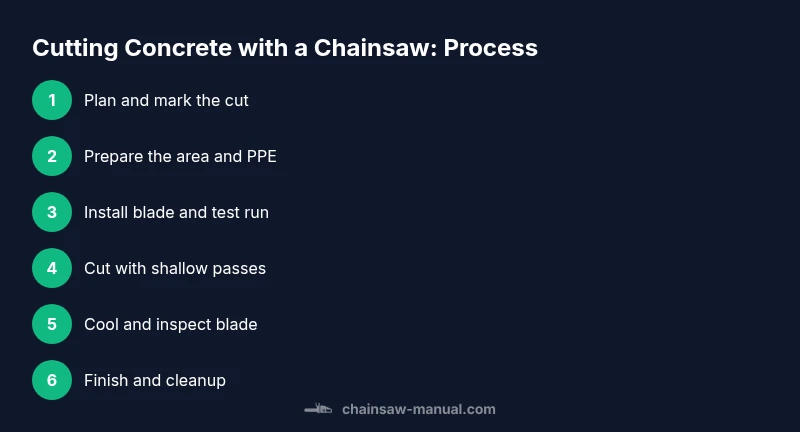
- 1
Plan and mark the cut
Identify the cut line, verify utilities, and mark the line with a chalk or marking tool. Set a shallow starting groove to guide the blade and reduce binding in the first passes.
Tip: Double-check the line from multiple angles to avoid miscuts; a laser level can improve accuracy. - 2
Prep the work area and safety
Clear debris, establish a safety perimeter, and set up barriers if others are nearby. Put on full PPE and ensure a clear escape route if the blade binds.
Tip: Have a second person present to monitor, especially when you are near edges or undercut sections. - 3
Install blade and verify compatibility
Mount the masonry diamond blade that matches your saw’s arbor and RPM rating. Check guards, anti-kickback features, and ensure the blade spins true before starting.
Tip: Run a brief no-load spin to listen for wobble or binding before contacting the material. - 4
Begin with a shallow groove
Start cutting along the marked line with a shallow groove. Keep the blade cool with water and avoid forcing the blade through the material.
Tip: Feed pressure should be steady, not heavy; let the blade do the work. - 5
Progress with controlled passes
Deepen the cut gradually with multiple passes, maintaining consistent speed and cooling in each pass. Stop to inspect edge quality and blade condition after every few passes.
Tip: If you notice glazing, pause and cool the blade; glazing reduces cutting efficiency. - 6
Finish edges and perform cleanup
Clean edges with a grinder or chisel if needed and remove all slurry. Inspect the cut for straightness and trim minor irregularities for a clean finish.
Tip: Return the area to a safe state immediately after cutting; wash down surfaces to prevent slip hazards.
FAQ
Is it safe to cut concrete with a chainsaw?
When done with proper equipment, training, and PPE, it can be performed safely. However, it presents risks such as kickback, dust exposure, and blade binding, so assess your skill level before proceeding.
Yes, but only with the right blade, water for dust control, and full protective gear. If in doubt, hire a professional.
What kind of blade do I need for concrete?
Use a masonry diamond blade rated for concrete; ensure the blade size and arbor match your saw and that it is suitable for wet cutting if you plan to use water cooling.
A masonry diamond blade designed for concrete is essential; match the blade to your saw and follow the manual.
Can I cut reinforced concrete with a chainsaw?
Reinforced concrete poses extra challenges; a chainsaw may struggle and can danger edges. In most cases, a professional will use a larger, purpose-built saw and specialized blades.
Reinforced concrete is best handled by pros with the right equipment.
Do I need water when cutting concrete?
Water or mist is strongly recommended to suppress dust, cool the blade, and reduce glare. Dry cutting significantly increases health risks from silica dust.
Yes, water helps control dust and cools the blade.
How deep can you cut in one pass?
Depth per pass should be shallow and gradually increased through several passes rather than a single deep cut. This minimizes blade binding and heat buildup.
Do shallow passes and build depth gradually.
What PPE should I wear for this job?
Wear eye protection, a respirator rated for silica, hearing protection, gloves, and sturdy footwear. A hard hat may be required on busy sites.
Protective eye, respiratory, hearing gear, and sturdy footwear are essential.
Watch Video
The Essentials
- Plan the cut and select the right blade.
- Protect yourself with proper PPE and site controls.
- Use shallow passes with adequate cooling to minimize wear.
- Monitor blade condition and edge quality throughout.
- Know when to hire a professional for safety-critical cuts.