Chainsaw Jobs: Safe, Practical How-To Guide
A practical, safety-first guide to chainsaw jobs for homeowners and professionals. Learn planning, PPE, step-by-step techniques for felling, limbing, bucking, and cleanup.


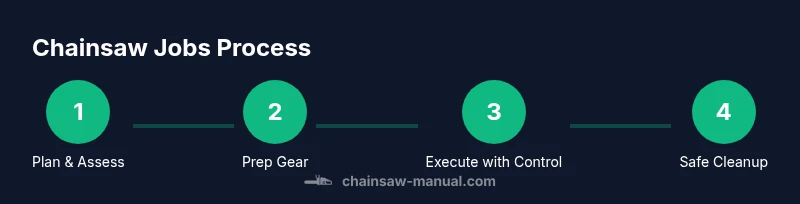
You will learn how to safely plan and execute common chainsaw jobs, including felling, limbing, bucking, and cleanup. You’ll identify hazards, select PPE, prepare the site, and follow a step-by-step process that minimizes kickback and injuries. The workflow emphasizes safety, setup, and post-job maintenance.
Assessing the Job Site
Before making a single cut, perform a quick, thorough assessment of the work area. Look for wind conditions, unstable ground, overhead limbs, nearby people or structures, and potential escape routes. Identify trees with cracks, rot, or leaning tendencies, and set a safe perimeter to keep bystanders at a minimum distance. According to Chainsaw Manual, proper site assessment reduces surprise movements and helps you plan your escape path if the tree starts to fall unexpectedly. Document a simple plan: where the tree will fall, how you will retreat, and what could go wrong. A clear plan minimizes risk and sets the stage for a controlled, predictable job.
PPE and Personal Safety Essentials
Personal protective equipment (PPE) is your first line of defense. Wear a certified hard hat with a face shield, hearing protection, cut-resistant chaps, gloves with grip, and sturdy boots with a non-slip sole. Ensure your PPE is in good condition and correctly fitted. In addition, inspect your gloves for wear, check the helmet for cracks, and verify that the face shield is clean and functional. This section covers why PPE matters, how it reduces injury severity, and how to verify proper fit before you start any chain-sawing task. Proper PPE also improves comfort during longer jobs, helping you stay focused and safe.
Selecting the Right Chainsaw Setup
Choose a chainsaw appropriate for the task and wood size. For light pruning, a smaller saw may be safer and more controllable; for larger trees, a longer bar can improve reach but requires more skill. Check chain tension, sharpness, and lubrication before you start. Adjust bar length to match the incoming debris and the planned direction of fall. This section explains how to balance power, control, and safety, and why a poor setup is a common cause of kickback or loss of control during chainsaw jobs.
Preparing the Work Area and Escape Routes
Clear the immediate area of trip hazards, branches, and debris. Establish clear escape paths at a 45-degree angle behind and away from the anticipated fall line. Set up a retreat plan with clear landmarks so you can move quickly if the tree shifts. Keep fuel cans, oil, and sharp tools properly stored outside the fall zone. Preparation reduces reaction time and gives you a safer margin if the tree behaves unpredictably during cutting.
Felling, Limbing, and Bucking Techniques
When felling, start with a proper notch on the side toward the planned fall direction, then make the back cut from behind the notch slowly, watching the hinge wood. Maintain a stable stance, grip the saw firmly, and cut with smooth, steady motions. For limb removal, work from the trunk outward, using wedges if needed to guide the fall. Bucking should be performed with chainsaw and log supported, never on unstable ground. This section details practical angles, body positioning, and sequencing to maximize control and minimize kickback risk.
Cutting Under Pressure and Safe Trigger Management
In tight spaces or when leaning trees are involved, cut with controlled, deliberate strokes. Avoid cutting with the nose of the bar (the tip) to minimize kickback. Use a touch-and-go approach for the most sensitive cuts, pausing if the tree binds or the wood breathes unexpectedly. Learn to read the wood and adjust speed to maintain control. This section focuses on safety strategies for challenging scenarios and how to recover from slips or jams.
Maintenance, Cleaning, and Post-Job Steps
After finishing, clean the air filter, inspect the bar and chain for wear, and verify chain tension. Dispose of oily rags safely and wipe down the equipment to prevent rust. Store fuel separate from the saw and ensure the chain brake is engaged when not in use. Regular maintenance reduces downtime and extends the life of your chainsaw jobs. This block ties together care routines with the real-world benefits of keeping equipment ready and safe.
Common Mistakes and How to Avoid Them
Rushing cuts, ignoring PPE, and failing to clear the work area are frequent sources of accidents. Not accounting for felling direction or failing to retreat after contact with the falling tree increases risk dramatically. Avoid cutting from unstable ground or into tensioned wood without a plan. This section highlights frequent errors and concrete steps to prevent them, reinforcing a safety-first mindset throughout every chainsaw job.
Adapting to Wood Species and Weather Conditions
Different species respond differently to cutting pressure, density, and moisture. Softer woods cut easier but can squat and shift unexpectedly; hardwoods require more time and careful backing. Wet or icy conditions increase slip risk and reduce chain grip. Prepare for species and weather by adjusting bar length, chain speed, and stance. This block helps you tailor your approach to the material you’re cutting and the day’s conditions.
Safety Recap and Next Steps
A successful chainsaw job hinges on preparation, PPE, proper setup, controlled technique, and maintenance. Review each step, assess what could be improved, and plan for future jobs with a sharper focus on safety. When in doubt, pause the task and reassess the environment, ensuring you always have a clear escape path and a plan B.
Tools & Materials
- Chainsaw with appropriate bar length(Choose bar length based on the wood size and cut type)
- PPE: helmet with face shield(Certified PPE; ensure proper fit)
- Hearing protection(Muffs or plugs rated for chainsaw use)
- Cut-resistant chaps or pants(ANSI/ISEA certified if possible)
- Gloves with grip(Non-slip gloves for better control)
- Sturdy boots with steel toe(Non-slip, ankle support)
- Fuel mix (gas/oil) for 2-stroke engine(Follow manufacturer ratio)
- Bar and chain oil(Keep chain lubricated during cuts)
- Wedges and a maul or hammer(Assist with felling direction and hinge control)
- Rope or handline for grip or safety(Used for securing or guiding loads in some setups)
- First aid kit(Basic supplies for minor injuries)
- Fire extinguisher or water source(In remote or dry conditions)
- Tool kit for chainsaw maintenance(Wrenches, file gauge, brush)
Steps
Estimated time: Total time: 2-3 hours
- 1
Assess the job site
Perform a visual inspection of the area, identify hazards, and plan an escape route. Determine fall direction and ensure bystanders are clear. Take notes on wind, slope, and obstacles to guide your approach.
Tip: Establish a clear zone and mark it with visible barriers before starting. - 2
Put on PPE and secure the area
Wear full PPE and confirm that all gear fits properly. Check that the work area is free of trip hazards and that neighbors are kept at a safe distance.
Tip: Double-check PPE for cracks or wear; improper equipment reduces protection. - 3
Prepare the saw and fuel system
Inspect chain tension and sharpness; fill with proper fuel mix and bar oil. Start the saw according to the manufacturer’s instructions and test cut on a small limb away from the fall line.
Tip: Always test idle and response to throttle in a safe open area. - 4
Clear a safe path for retreat
Ensure you have a clear, unobstructed path behind you as you begin the cut. Remove loose debris and set a safe working perimeter.
Tip: Keep your body between the tree and your retreat route; never turn your back to the tree. - 5
Make the notch and back cut for felling
Make the directional notch on the side toward the intended fall, then finish with the back cut leaving a hinge for controlled fall.
Tip: Do not cut all the way through the hinge; maintain a small wood reserve to guide the fall. - 6
Limb and buck safely
Limb branches from the trunk, then buck the log using a stable stance and cut sequence. Maintain perfect control of the bar and chain.
Tip: Work from the outside toward the center to reduce pinch points. - 7
Monitor for movement and take action
Watch for sudden shifts in the tree or wood tension. If the tree moves unexpectedly, stop, reassess, and retreat if necessary.
Tip: Never rush a cut; control is safety’s foundation. - 8
Shut down and clean up
Engage the chain brake, extinguish fuel sources, and clean tools. Return the area to its original state and store equipment properly.
Tip: Let the saw cool before laying it down; avoid storing hot equipment. - 9
Review and plan next steps
Reflect on what went well and what could be improved. Plan subsequent chainsaw jobs with improved procedures and additional PPE if needed.
Tip: Document lessons learned for future jobs and keep a maintenance log.
FAQ
What are the most common chainsaw jobs homeowners tackle?
Homeowners typically perform pruning, limb removal, bucking, and light felling of small to mid-size trees. Each task requires different technique and safety considerations. Planning and PPE are essential for all work.
Common jobs include pruning, limb removal, bucking, and light tree felling. Plan ahead and wear proper PPE for safety.
How can I reduce kickback risk during chainsaw jobs?
Choose the correct bar length, keep the saw's chain sharp, and avoid cutting with the tip of the bar. Maintain a stable stance and use a firm grip to control the cut.
Use a proper bar length, keep the chain sharp, and never cut with the bar tip. Stay grounded and in control.
What PPE is mandatory for chainsaw work?
A certified helmet with face shield, hearing protection, cut-resistant chaps, gloves, and sturdy boots are essential. PPE should be well-fitted and free of damage.
Wear a helmet with face shield, hearing protection, cut-resistant pants, gloves, and sturdy boots.
How do I maintain my chainsaw between jobs?
Regularly clean air filters, check chain tension, sharpen the chain, and lubricate with bar oil. Store fuel safely and keep tools organized for quick maintenance.
Clean the air filter, tighten the chain, sharpen it, and oil the bar after use.
What should I do if a tree begins to fall in an unexpected direction?
Stop, assess the new fall path, retreat along the planned escape route, and reassess your approach. Do not force a cut that could worsen the movement.
If a tree moves unexpectedly, stop and move along your escape path while reassessing.
Watch Video
The Essentials
- Plan every cut with a safe escape route.
- Wear complete PPE and verify equipment before use.
- Felling and bucking require controlled, deliberate motions.
- Maintain equipment to extend life and safety.
- Review outcomes to improve future chainsaw jobs.