Chainsaw CC Calculator: Learn and Calculate Engine Size
Learn how the chainsaw cc calculator estimates a power proxy from engine displacement (cc) and RPM. This educational tool explains inputs, assumptions, and how to interpret results safely for homeowners, DIY enthusiasts, and professionals.


What this calculator does and why it matters
The chainsaw cc calculator is a learning tool that translates engine size into a rough sense of how a chainsaw might perform under typical conditions. By combining engine displacement (cc), maximum RPM, and a simple efficiency factor, the calculator yields a proxy value that helps homeowners, DIY enthusiasts, and professionals compare saws without needing to run tests on every model. According to Chainsaw Manual, this approach is designed to illuminate the relationship between displacement, speed, and usable power while emphasizing safety and responsible use. The goal is not to replace manufacturer specifications, but to provide a clear, educational starting point for decision-making and planning jobs in the shop or in the field. Expect broader variation in real life because fuel quality, tuning, wear, and maintenance all influence actual performance. Use this as a quick-reference guide to understand trade-offs and to frame conversations with clients or crew members about tool selection and workload planning.
How the calculation works: a simple educational model
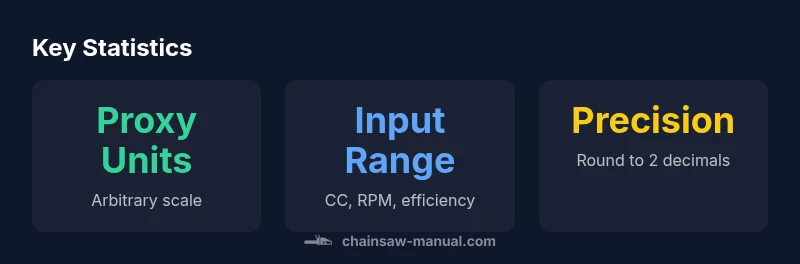
At its core, the calculator uses a straightforward formula to produce a power proxy from three inputs: engine displacement (cc), maximum RPM, and a simple efficiency factor that you control. The intention is educational, to show how larger engines and higher speeds typically offer more capability, while acknowledging practical limits. A sample formula is used: Estimated Power Proxy = round((displacementCc * maxRpm * efficiency) / pow(7120, 1), 2). This yields a numeric proxy in arbitrary units, not an exact horsepower value. You can adjust inputs to see how changes affect the proxy, and you can compare different saws side-by-side. The use of a fixed divisor like 7120 keeps the numbers readable and comparable, while the round() function ensures clean results for quick decisions.
Input variables explained: cc, RPM, efficiency
- Engine Displacement (cc): This is the total piston volume swept by the engine and is a primary driver of potential power. Larger cc generally correlates with higher torque potential, but real-world power also depends on exhaust, fuel delivery, and clutching.
- Maximum RPM: The engine speed at peak power. Higher RPM can increase the proxy value, but it also raises load and heat, so safe operation is essential.
- Efficiency Factor: A user-supplied multiplier (0.5–1.0) that represents engine tuning, fuel quality, and mechanical condition. A higher efficiency factor yields a higher proxy, reflecting a more favorable state of tune.
Interpreting results: what the proxy means and what it doesn't
The calculator's Output is a proxy in arbitrary units, intended to illustrate relationships rather than deliver a manufacturer-grade specification. The result helps you compare how changes in CC and RPM influence the calculated proxy, while recognizing that real performance depends on torque curves, compression, intake, exhaust systems, and accessory loads. Always cross-check with official spec sheets and consult a qualified technician if you’re planning a critical job. Consider safety margins: a higher proxy usually signals more capability, but it also implies greater handling demands and more aggressive maintenance needs.
Practical scenarios: quick examples you can try
Scenario A: cc = 60, maxRPM = 9000, efficiency = 0.85. Proxy ≈ round((60 * 9000 * 0.85) / 7120, 2) ≈ 64.54. This proxy suggests a moderate capability under typical use, useful for comparing similar saws.
Scenario B: cc = 40, maxRPM = 8000, efficiency = 0.9. Proxy ≈ round((40 * 8000 * 0.9) / 7120, 2) ≈ 40.36. A smaller engine at a healthy speed yields a lower proxy, useful for evaluating lighter workloads or smaller jobs.
How to use the calculator safely in the shop
Use the calculator as an educational help while planning work, not as a sole decision-maker for safety-critical tasks. Always wear proper PPE, follow Chainsaw Manual safety guidelines, and verify any tool choice against local regulations and manufacturer recommendations. The proxy helps you compare trends, but it does not replace field testing and official ratings. If in doubt, consult a qualified technician or instructor.
Extending your understanding with real specs and tests
To deepen your understanding, compare the calculator's proxy with published horsepower or torque curves from reputable sources, then note how differences in fuel, bar length, chain pitch, and clutch design affect outcomes. The Chainsaw Manual team emphasizes that hands-on testing and calibration under controlled conditions are best for critical decisions. Use the calculator as a learning companion, then corroborate with live tests and manufacturer data before committing to a workflow.