Chainsaw 60 Inch Bar: A Practical How-To Guide
Learn how to evaluate, select, and safely operate a chainsaw with a 60 inch bar for heavy-cut tasks. Includes maintenance, safety, and practical technique guidance from Chainsaw Manual.


By the end of this guide, you will understand how to evaluate, select, and safely operate a chainsaw with a 60 inch bar for heavy-cut tasks. According to Chainsaw Manual, you’ll learn what makes a long bar suitable, the safety prerequisites, maintenance routines to extend bar life, and practical techniques. Before you start, ensure you have proper PPE, a stable work area, and a compatible chain and tensioning setup.
What a 60-Inch Bar Enables
A chainsaw with a 60 inch bar extends your cutting reach and reduces the need for constant repositioning, which is especially helpful for large-diameter logs, open-field milling, or rough-cut work where a standard bar would require frequent repositioning. The larger bar length translates to fewer feed passes and faster material removal in suitable conditions. However, a longer bar also shifts the balance of the tool, increases vibration at the grip, and demands greater power and operator control. In practice, a chainsaw 60 inch bar shines when you have ample space, steady footing, and a clear escape route. When selecting this setup, compare power, weight, bar thickness, and chain compatibility to ensure the saw can handle the bar without excessive strain. For safety and reliability, always match bar length to the saw’s intended design and your experience level.
Safety Implications of Long Bars
Long bars demand heightened safety discipline. Always wear full PPE: helmet with face shield, hearing protection, cut-resistant chaps, and heavy gloves. With extended reach, kickback potential can increase in bottleneck cuts or where the bar’s tip enters the wood at awkward angles. Engage the chain brake during setup and movement, check bar oil delivery, and keep bystanders well clear. Regularly inspect the bar nose for burrs or nicks, as a damaged nose can worsen kickback. Maintain a firm stance, keep feet well apart, and never operate near overhead hazards or unstable ground.
When to Choose a 60 Inch Bar
A 60 inch bar is most advantageous when you’re handling large logs, milling, or performing heavy felling tasks in open spaces where the log diameter exceeds what shorter bars can handle efficiently. It’s not ideal for tight spaces, confined areas, or tasks requiring rapid climbs and flips. If you regularly work with large timber, own a well-powered saw, and can maintain accurate control, a 60 inch bar can pay off in time savings and productivity. Always assess your typical workloads, space constraints, and the availability of fuel and bar oil before committing to a long-bar setup.
Selecting a Chainsaw and Bar: Key Criteria
Choosing a chainsaw with a long bar involves balancing power, weight, and bar compatibility. Look for adequate torque to drive the bar under load, a sturdy chassis to dampen vibration, and a bar that matches your chain pitch and drive sprocket. Verify the bar’s groove width, gauge, and mounting mechanism align with your saw model. Ensure the chain is rated for use on long bars and consider a higher-capacity oil reservoir with a reliable oil pump. Remember: a longer bar increases leverage, so a safer practice is to select a model whose weight you can manage for extended cuts and transport.
Maintenance for Long Bars and Chains
Long bars require diligent maintenance to prevent bore wear, bar groove clogging, and chain derailment. Regularly wipe down the bar rails, inspect the groove for embedded wood and metal, and clean the oil passages. Use fresh bar oil and verify the pump delivers oil to the bar tip during idle and light cuts. Check chain tension frequently—loose chains derail easily on long bars, while overly tight chains can bind and heat up quickly. Sharpen the chain using the correct file size for your chain pitch, and replace any damaged guide bars promptly.
Operating Techniques with a 60-Inch Bar
Adopt a wide, stable stance with feet shoulder-width apart and knees slightly bent to absorb vibration. Begin with gentle cuts to establish bite depth and rate of feed, then proceed to controlled passes, taking care not to overreach. Maintain the bar at a slight angle to optimize kerf flow and avoid pinching. Use wedges when felling or bucking to guide the cut and prevent pivoting. Pause to assess bark movement, wood density, and the bar’s condition after every few passes.
Troubleshooting Common Issues
If the bar isn’t delivering oil, inspect the oil line, screen, and nozzle for clogs and ensure the oil reservoir isn’t empty. A dull chain or incorrect tension can cause extra resistance and heat; re-tension and sharpen as needed. If the bar nose shows unusual wear or nicks, stop and inspect the alignment with the drive sprocket. For frequent kickback, reassess stance, grip, and the angle of entry, and consider a dedicated bar-stabilizing technique. Regular maintenance reduces most operational problems.
Alternatives and Complementary Tools
If a 60 inch bar proves impractical for regular work, consider alternatives like shorter bars with milling accessories or a modular setup that lets you switch bar lengths as needed. Complementary tools such as wedges, felling levers, cant hooks, and milling guides can improve control and precision when working with larger stock. Assess whether adding a lighter, secondary saw for paired tasks improves overall efficiency and safety.
Real-World Projects and Case Studies
In practical settings, users have reported that a chainsaw with a 60 inch bar shortens cycle times for large-diameter bucking in open sites. In milling projects, careful planning of kerf width and consistent oiling has helped maintain bar life and cut quality. Always tailor your approach to the wood species, moisture content, and seasonal conditions. These real-world insights from Chainsaw Manual emphasize the importance of safety, readiness, and disciplined technique when using long-bar saws.
Tools & Materials
- PPE including helmet with face shield(ANSI Z89.1 compliant, hearing protection, cut-resistant chaps)
- Hearing protection(Padded earmuffs or plugs with adequate NRR)
- Cut-resistant chaps(Prevents leg injuries during kickback events)
- Chainsaw with appropriate horsepower(Must be capable of handling the 60 inch bar safely)
- 60 inch bar(Long-bar option compatible with the chain pitch and sprocket)
- Matching chain for long bar(Ensure correct pitch and gauge for smooth operation)
- Bar oil(High-quality bar-and-chain oil, verify oil flow to the bar)
- Chain sharpening/file kit(Keep cutting edges sharp for efficiency and safety)
- Wedges and felling wedge (optional)(Useful for guiding cuts and reducing binding)
- First aid kit(Include burn and pressure dressings)
Steps
Estimated time: 60-90 minutes
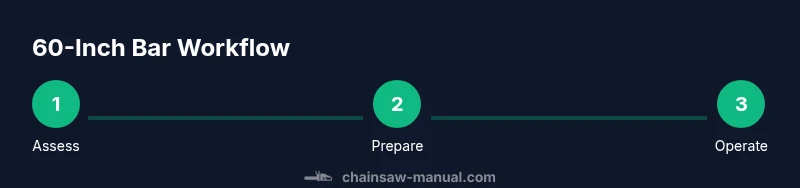
- 1
Assess task and plan
Identify the wood species, moisture content, and log dimensions. Sketch a cut plan that avoids pinch points and ensures a safe escape route. Confirm bar length is appropriate for the task and environment.
Tip: Plan two reverse steps for kickback-prone cuts and keep a clear path behind you. - 2
Check compatibility
Verify the saw has adequate torque to drive the long bar under load, and ensure the chain pitch matches the bar and drive sprocket. Inspect for any wear on mounts or bars.
Tip: If the saw feels sluggish under load, reassess duty cycle or switch to a shorter bar for this task. - 3
Inspect and mount chain
Remove the spark plug cover, wear gloves, and check that the chain is sharp and properly tensioned. Mount the chain according to the manufacturer’s guidelines and ensure the drive sprocket aligns cleanly.
Tip: Rule of thumb: chain should lift slightly away from the bar when properly tensioned. - 4
Install bar and tension
Slide the bar onto the bar studs, thread the bar nuts, and set initial tension. Check for smooth bar movement with the chain rotating by hand when the chain brake is engaged.
Tip: Tension should be snug but allow a millimeter of play; overtightening causes wear. - 5
Oil and test
Fill the oil reservoir and run the chain briefly while the saw is secured on a stable surface. Confirm oil is reaching the bar tip; adjust the pump if necessary.
Tip: Never run the saw without proper bar lubrication; dry bars overheat and wear quickly. - 6
Make controlled cuts
Engage the cut with a steady feed and minimal lateral movement. Maintain a strong stance, keep the bar nose in a safe position, and avoid cutting from unstable angles.
Tip: Feed depth should be incremental to prevent bar pinching or kickback. - 7
Maintain posture and safety
Keep feet planted, back straight, and shoulders aligned with the cut. Use wedges when needed and maintain a clear retreat path after each pass.
Tip: Take short breaks if you feel fatigue to preserve control and safety. - 8
Shutdown and maintenance
Cool the bar and chain after use, wipe away debris, and perform a quick inspection of the bar groove and chain tension. Store the saw in a dry, secure location.
Tip: Document any wear or issues to address before the next session.
FAQ
What tasks is a 60 inch bar best for?
A 60 inch bar excels at large-diameter log cutting and milling when space allows. It’s less suited for tight spaces or quick, small cuts. Always assess task size, environment, and your control before choosing this bar length.
A 60 inch bar shines for large logs or milling when you have space; it’s not ideal for tight spots. Consider task size and environment before choosing this bar.
Is a longer bar harder to control?
Yes, longer bars increase leverage and kickback risk if technique isn’t solid. They require more space, stronger stance, and careful handling. Practice under safe conditions before taking on difficult cuts.
Longer bars are harder to control; they need solid stance and safe practice under supervision.
What safety gear should I wear with a long bar?
Wear a certified helmet with face shield, hearing protection, cut-resistant chaps, gloves, and sturdy boots. Ensure your PPE fits properly and is kept in good condition.
Wear helmet with face shield, hearing protection, cut-resistant pants, gloves, and sturdy boots. Keep PPE in good condition.
Can I use a 60 inch bar on any chainsaw?
Not every chainsaw can safely power a 60 inch bar. Check the manufacturer’s specifications for bar length limits, motor torque, and balance. If unsure, consult the manual or a service professional.
Not every saw can power a 60 inch bar. Check specs and don’t guess.
How do I maintain a long bar effectively?
Regularly clean grooves, monitor oil flow, keep chain sharp, and re-tension as needed. Inspect for wear and replace damaged bars promptly to maintain performance and safety.
Keep grooves clean, oil flowing, chain sharp, and replace worn bars quickly.
What are common problems with long bars?
Oil delivery issues, bar nose wear, chain derailment, and pinched kerfs are common. Addressing lubrication, tension, and cutting technique typically resolves these issues.
Oil issues, nose wear, derailment, and pinching are common; fix oil, tension, and technique.
Watch Video
The Essentials
- Long bars extend reach but require more control.
- Safety gear is non-negotiable for long-bar operation.
- Regular maintenance extends bar life and performance.
- Plan tasks and maintain a clear escape path.