Chainsaw 40v: Safe Use, Maintenance, and Tips
A comprehensive, safety-first guide to chainsaw 40v operation, battery care, cutting techniques, maintenance routines, and practical tips for homeowners, DIY enthusiasts, and professionals.


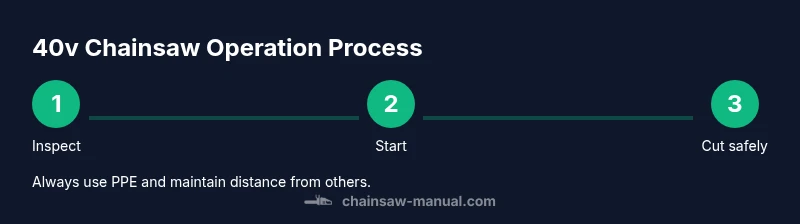
In this guide, you'll learn to safely operate a chainsaw 40v, perform pre-use checks, and complete a basic cut. You'll need PPE, a charged battery, bar oil, and a clear workspace. By the end, you'll know how to start safely and finish with proper maintenance.
What is a chainsaw 40v and why it matters
According to Chainsaw Manual, the 40v designation refers to a high-energy lithium‑ion battery platform that powers a cordless chainsaw for quick, quiet, emissions-free cutting. The '40v' label signals a balance between portable flexibility and usable cutting power, making it well-suited for homeowners, DIY projects, and light professional work. When you pick a chainsaw 40v, you're choosing an electric tool that avoids gasoline mixing, exhaust fumes, and frequent engine maintenance, while still delivering responsive power for tasks like limbing, bucking, and pruning.
In practice, a 40v chainsaw uses a brushless motor to optimize efficiency and battery life. It benefits from instant throttle response and typically lower vibration, which reduces user fatigue on extended projects. However, compared with professional gas saws, the runtime per charge and overall heavy-limbing capacity can be more limited. The Chainsaw Manual team emphasizes choosing a model with a robust battery, a reliable chain brake, and user-friendly maintenance features. This article explains how to maximize safety and performance when using a chainsaw 40v in real-world settings.
Safety foundations for electric chainsaws
Electric chainsaws operating on a 40v platform offer cleaner operation and quieter performance, but safety remains non-negotiable. Start with proper PPE: a hard hat with face shield, clear safety glasses, hearing protection, cut-resistant chaps, and snug gloves. Keep long sleeves and loose clothing away from the chain. Establish a clear work zone, remove distractions, and ensure bystanders stay at a safe distance. The chain brake should be engaged whenever you are repositioning or starting the tool, and never bypass safety features.
Before you begin, inspect the bar and chain for damage, verify battery contacts are clean, and confirm the oil reservoir is filled. If you notice frayed cutters, cracks in the housing, or a chain that won’t seat properly, don’t use the saw until you’ve addressed the issue. For chainsaw 40v models, avoid prolonged exposure to moisture and never use in wet conditions, which can compromise grip and circuitry. This section emphasizes slow, deliberate movements and a non-slip stance to minimize kickback.
Battery basics and how '40v' affects performance
The 40v designation primarily reflects the battery platform rather than a fixed power output. Battery voltage, capacity, and management influence how long the tool runs between charges and how quickly it reaches full power. A brushless motor paired with smart battery management typically delivers steady torque with reduced heat buildup. Expect a balance of portability and sufficient cutting power for light-to-medium tasks like pruning, limbing, and small-diameter wood. For heavier workloads, keep a backup battery charged and plan for shorter sessions.
Care and charging habits matter. Charge in a dry, cool area away from flammable materials, and avoid leaving a fully charged battery in extreme heat. Store batteries at moderate charge when not in use and follow the manufacturer’s recommendations for storage and replacement cycles. With careful battery handling, chainsaw 40v platforms can offer reliable performance with lower maintenance compared to gas-powered options.
Practical use cases and limitations of chainsaw 40v
A chainsaw 40v excels in residential tasks, including trimming branches, pruning, and cutting firewood from smaller-diameter logs. Its cordless design reduces fueling hassles and smoke, which is advantageous for indoor use or tight workspaces. However, users should recognize its limitations: longer, demanding cuts on large hardwoods or thick logs may deplete battery life faster and could temporarily reduce cutting speed. For heavy-duty felling projects, consider planning your work around battery swaps or choosing a higher-capacity model.
To maximize performance, select the correct chain tightness, maintain sharp cutters, and apply bar oil consistently. Use a steady, controlled stance and avoid overreaching. In complex terrain or overhead work, take extra precautions and consider partner assistance or mechanical aids when appropriate. The aim is to maintain control while preserving battery life and chain integrity.
Setup and pre-cut checks for a safe start
Starting a chainsaw 40v correctly reduces the risk of kickback and equipment damage. Begin with a clean work area and wired safety practices. Verify that the battery is securely seated and the chain is properly tensioned (not too loose, not so tight it binds). Lubricate the bar and chain generously, ensuring the oil passes freely to the chain during operation. If your model uses a chain brake, engage it before starting, then release it only when you’re ready to cut.
Establish a stable stance with your feet shoulder-width apart and your weight distributed evenly. Grip the saw firmly with both hands, keep your elbows unlocked, and maintain a straight line from shoulder to wrist. Always start with light, shallow cuts to warm up the blade, then progress to deeper cuts as you gain confidence. This approach minimizes sudden movements and protects the operator from unexpected chain behavior.
Maintaining control: posture, grip, and cutting technique
Technique matters as much as equipment. Keep the blade away from your body, and never cut above chest height. Use smooth, deliberate strokes rather than forced pulls, and maintain constant saw speed through the cut. Move your body with the work rather than forcing the saw through material. Protect your eyes and hands from wood chips, and watch for kickback zones near the top of the bar. If you encounter a snag or pinched wood, stop, assess, and adjust your position before continuing.
Regularly check chain tension and lubrication during longer sessions. Clear debris from the saw’s body to prevent overheating and ensure vents stay unblocked. Proper maintenance reduces downtime and extends the life of both the battery and chain. Chainsaw 40v tools are highly effective when operated with disciplined technique and consistent care.
Battery care, charging, and runtime management
Battery health is central to performance. Store and charge batteries in a cool, dry area away from direct sunlight. When loading, ensure the charger and battery connectors are clean and dry. If you notice slower charging or reduced runtime, inspect the battery contacts and consider cycling the battery to recalibrate the power gauge. During cutting, monitor battery temperature; if it becomes noticeably warm, pause and allow it to cool before continuing. Avoid deep discharges; recharge when the charge level is low but not completely empty to prolong life.
Finally, be mindful of environmental conditions. Cold temperatures can reduce runtime, while heat can shorten cycle life. Keep a spare battery handy for busy days and rotate usage to balance wear. With proper care, your chainsaw 40v will deliver dependable performance across many tasks.
Choosing a chainsaw 40v: features to compare and safety features to look for
When selecting a chainsaw 40v, compare battery capacity, charge times, and compatibility with common bar lengths. Look for a model with a robust chain brake, automatic oiling, easy tension adjustments, and well-designed safety interlocks. Ergonomics matter: a comfortable grip, balanced weight, and accessible controls reduce fatigue during extended use. Some models offer anti-kickback features or vibration-reduction technology that makes longer sessions more tolerable. Reading product reviews and checking service availability can improve confidence in your choice.
Consider the maintenance ecosystem: accessible replacement chains, simple lubrication systems, and a durable housing for everyday use. For homeowners, a 40v platform that balances portability with real-world cutting capacity is often sufficient. For professionals, prioritize high-capacity batteries and after-sales support from the manufacturer. The goal is to select a model that fits your typical tasks while ensuring safe operation and reliable service.
What customers should know: choosing the right 40v model and safety features
Choosing the right chainsaw 40v depends on your typical tasks, climate, and workspace. Start with a realistic assessment of the wood you’ll be cutting and the space you’ll work in. Evaluate battery life, charging infrastructure, and the availability of replacement parts. Safety features should include a responsive chain brake, easily accessible kill switch, and clear visibility of the chain path. Always verify that PPE and maintenance tools are included or easily purchasable. This ensures you’re prepared to cut safely and efficiently, reducing risk and downtime over the tool’s lifespan.
Tools & Materials
- 40V cordless chainsaw unit(Choose a brushless model for better efficiency and longevity)
- Rechargeable 40V battery(Ensure it is charged before starting work)
- Battery charger(Use the manufacturer-provided charger)
- Personal protective equipment (PPE)(Hard hat with face shield, safety glasses, hearing protection, cut-resistant chaps, and gloves)
- Bar oil(Use the recommended viscosity; check levels before use)
- Wrench or scrench for bar tension(Keep tools on hand for tension adjustments)
- Sturdy work gloves and boots(Recommended for comfort and protection)
- Workpiece scraps or firewood for practice(Helpful for initial familiarization cuts)
Steps
Estimated time: 30-45 minutes
- 1
Inspect tool and PPE
Visually inspect the chainsaw 40v for damage. Check the chain tension, bar, anti-kickback features, and battery contacts. Confirm all protective covers are in place and PPE is ready before approaching the work site.
Tip: If anything looks damaged, do not operate the saw until it’s repaired. - 2
Prepare the work area
Clear the area of obstacles, mark a safe cutting zone, and ensure bystanders are at a safe distance. Establish stable footing and a comfortable stance to maintain balance during cuts.
Tip: Secure the log or branch with clamps or stands when possible. - 3
Charge battery and check lubrication
Insert a charged battery and verify the chain oil reservoir is filled. Spin the chain gently to confirm lubrication is flowing. Avoid running dry cutting to prevent premature wear.
Tip: Carry a spare battery if you anticipate longer sessions. - 4
Start safely and warm up
Engage the chain brake, place the saw on a stable surface, and start according to the model’s procedure. Let the saw idle briefly to warm up the motor and stabilize belt resistance before cutting.
Tip: Keep hands away from the chain path during start. - 5
Make controlled cuts
Stand with feet apart and hips aligned with the cut. Begin with shallow cuts to establish a groove, then progressively deepen while maintaining a steady pace and consistent pressure.
Tip: Avoid twisting or forcing the bar; let the chain do the work. - 6
Finish and service
Cool down the saw, clean debris, and inspect the chain for wear. Refill bar oil if needed and store the tool in a dry location. Record any maintenance needs for your next session.
Tip: Wipe down the exterior and check vents for dust buildup.
FAQ
Is a chainsaw 40v as powerful as a gas-powered chainsaw?
Electric 40v models provide ample power for most homeowner tasks like pruning and small-diameter cutting. For heavy felling or very large logs, gas models may offer more sustained torque. Choose based on your typical projects and space constraints.
Electric 40v tools meet most home tasks, but for heavy-duty felling you might prefer gas.
What runtime can I expect from a 40v chainsaw battery?
Runtime varies with battery capacity and cutting load. Light-duty work may allow several cuts per charge, while demanding tasks can shorten runtime quickly.
Runtime depends on the battery and workload—plan for multiple charges on bigger jobs.
Do I need special maintenance for an electric chainsaw 40v?
Maintenance is lighter than gas tools but still important: keep the chain sharp, lubricate, clean vents, and store the battery properly. Regular checks reduce downtime.
Yes—regular cleaning and sharpening keep performance steady.
Can I use this tool in wet conditions?
Avoid using in rain or on wet wood; moisture can increase slip risk and affect electronics. Keep the area dry and use protective covers as needed.
Don’t use it in wet conditions; dry work areas are safer.
How should I store the battery when not in use?
Store at moderate temperatures, partially charged for long-term storage, and away from metal objects. Follow manufacturer guidance for the best results.
Store the battery in a cool, dry place with moderate charge.
Watch Video
The Essentials
- Wear full PPE and respect chain safety features.
- 40v offers cordless convenience with practical runtime for light-to-medium work.
- Follow a calm, stepwise process from setup to cleanup.
- Maintain battery health and bar oil to maximize longevity.