Chainsaw 16: Safe Use and Maintenance Guide
Learn to safely operate a chainsaw 16 with practical steps, PPE, setup, cutting techniques, and maintenance tips from Chainsaw Manual.


This guide shows you how to safely use a chainsaw 16 for common yard tasks, including setup, PPE, starting procedures, cutting techniques, and routine maintenance. You’ll learn to minimize risk, maintain control, and extend tool life with practical, step-by-step actions. By following these safety-first practices, you can complete firewood prep, limb removal, and light felling confidently.
Why the 16-Inch Bar Matters for Home Projects
The 16-inch bar strikes a balance between cutting depth, maneuverability, and weight, making it a popular choice for homeowners and pros alike. For many yard tasks, a chainsaw 16-inch can handle typical firewood sizes, limbs, and undergrowth without becoming unwieldy. According to Chainsaw Manual, this bar length provides enough reach for working from stable ground while keeping control in tight spaces. When you know the limits of this bar, you’ll select appropriate cutting strategies and reduce fatigue over long sessions.
- Versatility: Handles many common tasks without swapping bars.
- Control: Lighter weight reduces fatigue and improves maneuverability in confined areas.
- Reliability: Widely supported by accessories and parts, making maintenance easier.
Understanding how this size influences performance helps you plan tasks effectively and select the right techniques for each job.
Essential Tools, PPE, and Accessories
Safety comes first. Before you lift a chainsaw, gather essential PPE and the right accessories to support safe operation. At minimum, you should have a sturdy helmet with face shield, hearing protection, cut-resistant gloves, chainsaw chaps, and non-slip boots. A sharpening file, scrench (screwdriver/oval wrench), bar oil, fresh chain, and a suitable fuel source or power supply complete the setup. Keep a compact first aid kit within reach and a fire extinguisher nearby if you’re in dry conditions. Always inspect the bar and chain for damage and ensure the chain brake is engaged when moving the saw.
- PPE should be worn at all times during use.
- Have a designated area free of bystanders and pets when cutting.
- Keep tools organized to avoid misplacing essential items.
Choosing a Chainsaw 16: Gas vs Electric, Bar and Chain Quality
For a chainsaw 16, you’ll encounter gas-powered and electric models. Gas saws offer portability and strong cutting power for heavier tasks, but require fuel mixing and regular maintenance. Electric models are quieter and simpler to start, ideal for light to medium-duty work. Regardless of power source, verify that the chain pitch, gauge, and drive sprocket match the 16-inch bar. Weight distribution matters too; balance the saw so it sits comfortably in your hands, reducing fatigue during extended work. Consider user reviews and local support networks when evaluating brands and parts availability.
- Gas vs electric trade-offs depend on usage patterns and access to power.
- Verify chain compatibility to prevent binding and wear.
- Choose a model with reliable service support and parts availability.
Pre-Start Checks and Fuel/Oil Setup
Before starting, perform a quick but thorough inspection: tighten the chain, check chain tension, verify bar oil delivery, inspect the air filter, and ensure the chain brake remains engaged when transporting the saw. For gas models, mix the fuel according to the manufacturer’s ratio and add fresh oil to the bar. Electric models should be charged and ready with a suitable extension cord or battery. Always confirm that the area is clear of obstructions and that there are no loose clothing or jewelry that could snag on the chain.
- A loose chain increases the risk of derailment and kickback.
- Fresh fuel and oil optimize performance and cooling.
- Clear space around you to maintain safe posture and control.
Safe Start and Basic Cutting Techniques
Start the saw only after you’ve assumed a stable stance with both hands on the front and rear handles. Engage the chain brake, pin the bar tip to the ground, and use the rope-start or electric start as appropriate. When cutting, keep the bar slightly nose-down and resist the urge to reach or overextend. Begin with small, controlled cuts to gauge resistance and wood hardness, then progress to deeper cuts as your control improves. Always cut from your standing position and avoid overreaching.
- Maintain a firm, balanced stance with knees slightly bent.
- Use two hands and maintain a stable grip at all times.
- Stop the saw and assess if wood pinches or binds during a cut.
Kickback Prevention and Safe Handling
Kickback is a major risk with a chainsaw. Prevent it by keeping the saw under control, avoiding contact between the nose of the bar and wood, and using a stump or bench to secure the work piece when possible. Always keep your body to the side of the saw path and never cut above shoulder height. If the wood pinches, stop the motor, release tension slowly, and reposition before continuing. Replace dull or damaged chains promptly; a sharp chain reduces the chance of kickback by providing smoother cuts.
- Maintain awareness of the bar nose’s position during all cuts.
- Avoid cutting with the tip near the work surface.
- Regularly check chain sharpness and tension to minimize kickback risk.
Maintenance and Cleaning Routine for Longevity
A well-maintained 16-inch chainsaw lasts longer and performs more predictably. After use, clean the cooling fins, wipe down the housing, and remove sawdust from the air intake. Check the chain for dullness and tighten or sharpen as needed. Inspect the spark plug or motor connections for wear and replace parts according to the manufacturer’s schedule. Store the saw with fresh bar oil to prevent corrosion and ensure the chain is tensioned to avoid rust during downtime.
- Clean after each use to prevent sap buildup and corrosion.
- Regularly sharpen the chain for efficient cutting and safety.
- Replace worn parts to avoid unexpected failures.
maintenance-focused guidance and proven practices help sustain performance over years of use.
Storage, Transport, and Off-Season Care
Store the chainsaw in a cool, dry place away from direct sunlight and flammables. Use a bar cover or scabbard to protect the chain and prevent accidental contact. If you won’t use the tool for weeks, drain the fuel or use a stabilizer to protect the carburetor and fuel system. Transport the saw securely using a strap or the original scabbard, and never carry it by the blade. Regularly inspect storage conditions and maintain a checklist for seasonal maintenance.
- Use a protective bar cover during storage.
- Stabilize fuel to prevent gum buildup in the carburetor.
- Keep the area around the storage space clean and well-ventilated.
Troubleshooting Common Issues and When to Seek Help
Common issues include a dull chain, difficulty starting, poor lubrication, and frequent stalls. If the chain refuses to start after routine checks, consult the manual for the correct starting procedure and fuel ratios. A chain that won’t lubricate may indicate a clogged oil line; check the oil pump and bar oil reservoir. For persistent problems or unfamiliar symptoms, contact a qualified technician or your local dealer. Airlines and safety guidelines should always be followed when transporting a chainsaw to service.
- Follow the manufacturer’s troubleshooting flow before seeking service.
- Do not operate a saw with known safety or mechanical issues.
- Seek professional repair for complex problems.
Getting the Most From Your Chainsaw 16: Pro Tips
To maximize performance and safety with a chainsaw 16, develop a routine that includes proactive maintenance, correct cutting technique, and continuous safety awareness. Regularly check chain tension, sharpening intervals, and bar oil levels. Keep a log of maintenance tasks and replacements to track tool health over time. Finally, practice safe handling in varied weather and wood conditions to build confidence and facility with the tool.
Tools & Materials
- Chainsaw 16-inch model (gas or electric)(Ensure it is in good working order and matches your bar length)
- Personal protective equipment (PPE)(Helmet with face shield, hearing protection, cut-resistant gloves, chainsaw chaps, sturdy boots)
- Fuel and bar oil(Gasoline with correct octane and fuel-oil mix; bar oil for lubrication)
- Sharpening kit + files or a chain grinder(Keep chain sharp for safe cutting and reduced kickback)
- Screwdriver/quirk tool (scrench)(For adjusting chain tension and bar nuts)
- First aid kit(Keep on-site for emergencies)
- Bar oil container + fuel can(Store properly away from heat sources)
Steps
Estimated time: 60-90 minutes
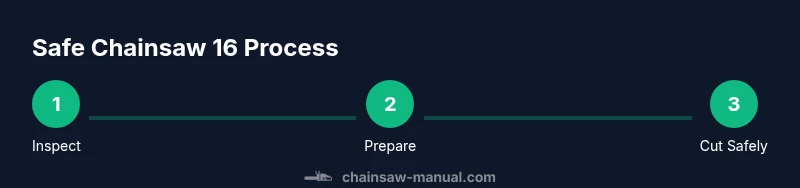
- 1
Inspect the chainsaw and PPE
Thoroughly check the chain for damage, ensure proper tension, inspect the bar, and confirm the chain brake engages. Verify PPE is intact and fitted correctly before starting.
Tip: A quick pre-check saves time and prevents injuries. - 2
Prepare fuel, oil, and chain
For gas models, mix fuel per manufacturer guidelines and fill the bar oil reservoir. Check chain sharpness and ensure proper tension.
Tip: Use fresh fuel and oil to maintain performance. - 3
Secure your work area
Clear debris, remove bystanders, and establish a stable stance. Place the work surface or tree in a stable position to avoid unexpected shifts.
Tip: Maintain a wide stance and keep your body to the side of the saw path. - 4
Starter technique
With the chain brake engaged, start the saw on a stable surface or with a partner holding the saw. Ensure you have a firm grip and both hands on the handles before the engine turns over.
Tip: Never start with the chain moving; always disengage the brake first. - 5
Make a test cut
Test wood hardness and adjust your grip and stance before committing to a full cut. Start with shallow cuts to assess resistance and wood type.
Tip: A short test bite helps prevent pinching and kickback. - 6
Advance with controlled cuts
Use two-handed control, keep the nose away from your body, and avoid cutting from awkward angles. Maintain steady pressure without forcing the saw.
Tip: Let the chain do the work; don't push aggressively. - 7
Dealing with pinches and kickback
If the wood pinches, stop, relieve tension, and reposition. Do not twist or jerk to free the blade; re-evaluate the cut path.
Tip: Keep an escape route planned in case of a snag. - 8
Shut down and clean
Engage the chain brake, power off, and allow the chain to stop. Clean the unit and remove debris from the cooling fins and air intake.
Tip: Store with clean air intake to prevent clogging. - 9
Store and plan maintenance
Lubricate the bar, wipe down the body, and store in a dry location with the chain tensioned correctly. Schedule maintenance checks.
Tip: Create a simple maintenance log for future reference.
FAQ
Is a 16-inch chainsaw suitable for small trees and routine yard work?
Yes, a 16-inch chainsaw is versatile for most yard work, including small tree limbs and firewood. For larger trees, you might need a longer bar or a different tool. Always assess wood size and your comfort level before cutting.
Yes, a 16-inch chainsaw works well for many yard tasks, but larger trees may require a longer bar. Assess wood size and your comfort first.
Can I use a chainsaw 16 indoors or in enclosed spaces?
Operating a chainsaw inside is generally unsafe due to fumes, noise, and potential fire hazards. Outdoor spaces with good ventilation are best, and you should always follow local safety guidelines.
No—chainsaws are designed for outdoor use. Always cut outside where there’s ventilation and space.
What PPE is absolutely required when using a chainsaw 16?
At minimum, wear a helmet with face shield, hearing protection, cut-resistant gloves, chainsaw chaps, and sturdy boots. Additional eye protection and a dust mask are recommended in dusty conditions.
Always wear a helmet with face shield, hearing protection, gloves, chainsaw chaps, and sturdy boots.
How often should I sharpen the chain on a chainsaw 16?
Check chain sharpness regularly and sharpen when you notice decreased cutting efficiency or increased pulling. A sharp chain reduces effort and improves control.
Check the chain regularly and sharpen when efficiency drops.
What maintenance tasks are essential after each use?
Clean debris from the saw, inspect the chain and bar, and ensure oil channels are clear. Store with a small amount of bar oil to prevent rust and keep the chain tensioned properly.
Clean the saw, inspect parts, and store with light oil on the bar.
When should I seek professional service for my chainsaw 16?
If you notice persistent starting issues, unusual vibrations, or loss of lubrication that you can’t fix, consult a professional technician or your local dealer.
If it won’t start or shows unusual behavior, get it serviced.
Watch Video
The Essentials
- Wear complete PPE and maintain a safe stance at all times.
- Choose a 16-inch bar for a balance of power and control.
- Follow proper setup, starting, and cutting techniques to minimize risk.
- Regular maintenance extends chain life and performance.
- Store and transport safely to prevent accidents and damage.