Can Chainsaws Cut Bamboo? A Practical Safety Guide
Can a chainsaw cut bamboo? Learn safe, practical cutting methods, blade choices, and setup tips with Chainsaw Manual analysis for homeowners, DIYers, and professionals.


Yes, a chainsaw can cut bamboo, but it requires careful planning, the right blade, and strict safety. According to Chainsaw Manual, bamboo varies in moisture and density, so select a sharp chain and a suitable bar length, then cut in controlled steps to reduce binding and kickback. Always wear PPE and follow safety guidelines.
Can Chainsaws Cut Bamboo? Understanding the Basics
Bamboo is not a uniform material; it ranges in density, fiber direction, and moisture depending on species and age. Can chainsaws cut bamboo? Yes—under the right conditions. The Chainsaw Manual team emphasizes that a deliberate approach yields cleaner cuts, less heat buildup, and safer work. Before you touch the trigger, identify the culm diameter, the moisture state (fresh green vs. dry), and the length of the piece you’ll be cutting. Prepare to work slowly and steadily rather than forcing the saw through the bamboo. Plan your cuts as a sequence of shallow relief cuts to minimize pinching, then complete the cut with full passes. If the bamboo is particularly fresh, allow for a brief acclimation period to the workshop environment to reduce moisture-driven binding. The upshot: bamboo can be cut with a chainsaw when you respect its variability and follow a staged cutting plan. According to Chainsaw Manual, reading moisture and density information helps you choose the best starting approach.
Blade choices and equipment for bamboo cutting
The choice of blade, chain, and bar length defines how safely and cleanly bamboo can be cut. Start with a sharp chain and a bar long enough to clear the culm’s diameter; for many home projects, an 14–20 inch bar is comfortable and controllable. Use a standard, low-kickback chain and verify chain tension and lubrication before each cut. Maintain a sharp edge; a dull chain wastes power, creates excess heat, and increases binding risk. Keep the chain brake engaged during setup and repositioning to avoid accidental movement. For bamboo, a controlled feed and light pressure help prevent the material from pinching or jumping the chain. If you encounter dense nodes, pause to reassess and, if needed, introduce relief cuts to ease the final pass. Chainsaw Manual guidance suggests matching blade choice to culm size and moisture state for predictable performance.
Bamboo properties that affect cutting
Bamboo characteristics—such as moisture content, culm diameter, node density, and internal hollowness—significantly influence cutting behavior. Fresh green bamboo holds more moisture and can bind the chain more readily, while dry bamboo is harder and prone to cracking if forced. Nodes create hard resistance points, requiring careful feed and sometimes relief cuts to bypass. The bamboo’s fiber direction also impacts tear-out; cutting with the grain when possible reduces fiber tearing and improves surface finish. Chainsaw Manual analysis shows that understanding these properties helps tailor your approach, from initial relief cuts to final passes, and minimizes wear on the chain and bar.
Safety prerequisites: PPE and kickback risks
Safety is non-negotiable when cutting bamboo with a chainsaw. Wear a ANSI-rated helmet with face shield, hearing protection, cut-resistant chaps or pants, snug-fitting gloves, and sturdy boots. Eye protection is essential to guard against wood chips and dust. Maintain a firm stance with feet shoulder-width apart, keep the saw close to body, and avoid overreaching. Kickback is more likely when the tip of the bar contacts hard nodes or when the saw is not supported by a stable surface. Chainsaw Manual emphasizes keeping your hands behind the bar, using the chain brake during repositioning, and never cutting above shoulder height without secure footing. For added protection, consider a work apron or bib that covers the legs in case of offcuts.
Preparation and setup: securing bamboo, work area, and tool care
Preparation creates a safe cutting environment. Secure long bamboo culms with clamps or a sturdy vise so they don’t roll or shift during the cut. If working outdoors, clear debris, maintain good lighting, and establish a stable, non-slip stance. Position yourself so that you can pull the saw toward your body with controlled, straight passes rather than forcing at odd angles. Inspect the blade and chain, setting the pitch and depth gauge to manufacturer recommendations. Ensure your fuel and oil mix is correct and that the chain oil reservoir is filled. After setup, test cut on a scrap piece to verify bite and feed before proceeding to the main cut. This approach aligns with Chainsaw Manual safety practices and reduces the risk of kickback.
Cutting technique and workflow: staged approach for bamboo
Adopt a staged cutting plan to minimize binding and heat buildup. Start with shallow relief cuts on the outer surface to create a path for the final pass, then make progressive passes to complete the cut. Use a firm, controlled feed—do not push aggressively; let the saw do the work. If the bamboo binds, back off slightly, release tension, and reposition. For thicker culms, consider cut orientation (lengthwise or cross-cut) based on the intended outcome. Maintain audible chain tension and never idle the saw in the middle of a tough section. Chainsaw Manual guidance recommends taking your time and working from the outer edges toward the core to preserve bamboo integrity.
Common mistakes and how to avoid them
Common errors include using a dull chain, forcing the cut, and neglecting stabilization. Cutting bamboo without securing the culm can cause pinching or kickback. Cutting too quickly through wide sections increases heat and chain wear. Neglecting PPE can lead to injuries from chips and debris. Regularly checking chain tension and bar oil levels prevents overheating. The correct approach is to stay methodical, secure the workpiece, and use relief cuts when encountering hard nodes. Chainsaw Manual emphasizes learning from each cut and adjusting technique based on bamboo species and moisture state.
Alternatives to chainsaws and post-cut care
For very slender culms or delicate bamboo, hand saws or pruning saws may provide superior control and finish. If a chainsaw is necessary, pair it with a stable support and a controlled workflow to avoid damaging the bamboo. After cutting, remove loose chips, clean the bar and chain, and inspect for any damage. Store bamboo offcuts in a dry, ventilated area to prevent mold growth. Chainsaw Manual notes that for projects involving a lot of bamboo, planning a dedicated setup or a fixed cutting station can save time and improve safety over multiple sessions.
Maintenance and storage after bamboo cutting
Post-cut maintenance is essential to keep your tools in peak condition. Wipe down the bar and chain to remove sap and dust, then re-tension and lubricate the chain. Check for any signs of wear, such as burrs or cracked spacers, and replace them as needed. Empty or replace fuel, drain old oil, and inspect the air filter for cleanliness. Store the chainsaw in a dry, secure location away from children and pets. Safely secure offcuts; consider composting or proper disposal according to local guidelines. The Chainsaw Manual team recommends regular maintenance checks after each bamboo cutting session to extend tool life.
Tools & Materials
- Chainsaw with chain brake(Ensure a sharp chain and proper tension; engage brake during setup)
- Bar length suitable for bamboo diameter(Generally 14–20 inches for typical culms)
- Sharp chain designed for hardwood or general purpose(Keep sharp, avoid dull blades; check depth gauges)
- Personal protective equipment (PPE)(Helmet with face shield, hearing protection, cut-resistant pants, gloves)
- Clamps or sawhorses to secure bamboo(Stabilize the culm to prevent movement)
- Tie-down strap or rope(Stabilize long culms; prevent rolling during cuts)
- Fuel and bar oil(Use fresh mix; ensure proper lubrication throughout cutting)
- Measuring tape(Plan cut lengths and verify culm diameter)
- First aid kit(Keep accessible; basic wound care supplies)
- Cloth rags or brushes(Clean sap and sawdust after cutting)
Steps
Estimated time: 60-90 minutes
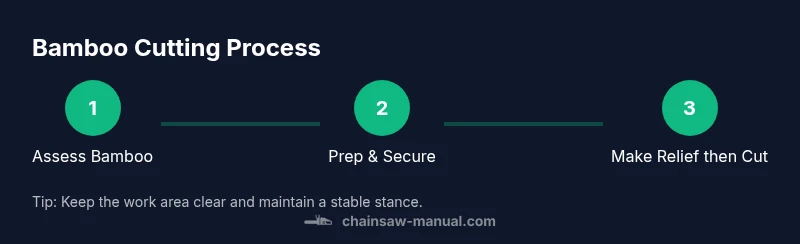
- 1
Assess bamboo and plan cuts
Examine culm diameter, moisture state, and node density. Determine whether relief cuts are needed before the final pass. Document your plan and secure the work area.
Tip: Always start with a dry run on scrap wood to test grip and stance. - 2
Prepare the saw and safety gear
Check chain tension, oil levels, and fuel. Put on all PPE and ensure the chain brake is engaged when not actively cutting.
Tip: Wear snug clothing and tie back long hair to prevent entanglement. - 3
Secure the bamboo
Clamp or tie-down the culm so it cannot roll or shift. Position yourself so you can pull the saw toward you with controlled passes.
Tip: Keep the workpiece lower than shoulder height to reduce reach and improve control. - 4
Make relief cuts first
Create shallow relief cuts on the outer surface to carve a path for the final cut. This reduces binding and guides the blade.
Tip: Use light pressure and let the chain do the cutting work. - 5
Complete the cut with staged passes
Proceed with progressive passes, maintaining even feed pressure. If resistance increases, pause, re-balance, and reposition.
Tip: Don't force the cut; hard bamboo can snag the chain if pushed too hard. - 6
Finish, clean up, and inspect
Wipe the blade, re-lubricate, and inspect for wear or damage. Clear chips and tidy the work area.
Tip: Document any unusual knots or defects for future reference.
FAQ
Can I cut bamboo smaller than the culm diameter with a chainsaw?
Yes, but use relief cuts and work slowly to avoid binding. Reposition often and maintain a firm stance. A staged approach reduces risk and improves the finish.
Yes, but use relief cuts and move slowly to avoid binding. Reposition often and stay steady.
Is it safe to cut bamboo indoors with a chainsaw?
Indoor cutting increases risk from dust, fumes, and limited ventilation. If indoors, ensure excellent ventilation, clear escape routes, and maintain a neutral, open space for safe movement.
Indoor cutting is riskier; ensure good ventilation and a clear space.
What PPE is mandatory when cutting bamboo with a chainsaw?
Wear a helmet with face shield, hearing protection, cut-resistant pants, gloves, and sturdy boots. Eye protection is essential for debris, and a high-visibility vest helps in busy areas.
Wear full PPE including helmet, face shield, hearing protection, gloves, and cut-resistant pants.
Should I soak bamboo before cutting to reduce knotting?
Soaking changes moisture content and can complicate cutting dynamics. Better to cut when bamboo is acclimated to the work environment and actively monitor moisture rather than soaking.
Soaking isn't recommended; acclimate bamboo and monitor moisture instead.
Will a longer bar help with thick bamboo?
A longer bar can provide better reach and control for thick culms, but it also increases leverage. Match bar length to culm diameter and your stability.
A longer bar can help, but ensure you stay balanced and safe.
How can I minimize kickback when cutting bamboo?
Maintain a firm stance, keep the chain sharp, avoid cutting with the tip, and use the chain brake during repositioning. Controlled, straight passes reduce kickback risk.
Stay steady, keep the chain sharp, and avoid bar tip contact to reduce kickback.
Watch Video
The Essentials
- Assess bamboo properties before cutting.
- Choose a sharp chain and an appropriate bar length.
- Cut in staged steps to minimize binding and kickback.
- Prioritize PPE and a secure work area.
- Maintain your chainsaw and store bamboo responsibly.