What Type of Chainsaw Chain Is Best for Ripping
Learn how to choose the right ripping chain for efficient, safe long cuts. This Chainsaw Manual guide covers chain design, compatibility, and best practices for ripping with a chainsaw.


In ripping work, the best chainsaw chain is a dedicated ripping chain designed for long, straight cuts. It minimizes kerf, improves control, and pairs with the bar and power of your saw when used with proper safety practices. Balanced maintenance, correct tension, and PPE are essential for safe ripping sessions.
The Ripping Chain Question: Why a Special Chain Matters
In rip-cut work, the chain matters as much as the saw. A dedicated ripping chain is designed to shed wood more predictably along long, straight cuts, reducing kerf and improving control. This helps maintain straight lines and minimizes binding. According to Chainsaw Manual, choosing the right chain starts with understanding the bar, wood type, and typical cut length. The right chain not only speeds progress but also enhances safety by reducing kickback risk when used with proper technique and PPE. In rip-oriented projects, you’ll notice less wandering and a cleaner finish when the chain teeth are aligned with the cut direction and the drive links ride smoothly in the bar groove. While a ripping chain won’t magically fix bad technique, it complements sound practice, better resistance to pinching, and longer-term tool integrity. This section sets the stage for what to look for and how to decide if a ripping chain is right for your work.
Understanding Rip-Cut Chain Design
Rip-cut chains are engineered with geometry that favors long, straight passes. They often feature wider gullets and a ground profile that reduces the tendency of the chain to grab or deflect in softwood, knots, or resin pockets. Tooth shape and placement can influence bite and tracking, especially when you’re feeding the saw through a log with a consistent pace. The goal is smoother cutting with less resistance at the cutter, while maintaining good debris removal to prevent clogging. Different manufacturers may label their rip-oriented chains in slightly different terms, but the core concept remains: optimize the chain for linear cuts, minimize resistance, and ensure compatibility with your bar and saw power. A properly designed rip chain works best when paired with even bar oiling and steady feed pressure.
Rip Chains vs Standard Chains: What Counts
The key differences between ripping chains and conventional chains lie in tooth geometry, ground profiles, and how the drive links interact with the bar groove. Rip chains typically feature larger flat-top or semi-chisel cutters that present a consistent cutting edge along a long path, reducing the tendency to bite aggressively and bind. Standard chains excel at general-purpose cutting but may heat up faster or deviate when you’re ripping large sections of lumber. In practice, a ripping chain helps maintain straight lines with fewer deflections, especially on softwoods and damp stock where binding is more likely. When deciding, assess your typical job size, wood species, and bar length, and choose a chain designed for long-length cuts rather than quick, turning passes.
Materials and Sharpening Considerations
Premium ripping chains are built from high-quality steel with heat-treated teeth to maintain edge retention under higher loads. Sharpening a ripping chain requires care to preserve tooth geometry and the flat-top profile. Use a round file matched to your chain’s pitch and a filing gauge to maintain the correct depth and angle. Regular maintenance—cleaning resin, deburring burrs, and ensuring the file cuts evenly—extends chain life and keeps the chain from glazing. If your environment involves resin-rich hardwoods, consider a slightly coarser rake angle to reduce clogging, but always follow the manufacturer’s sharpening specs. Chains should be sharpened when you notice reduced bite or increased effort for the same cut length.
Bar, Sprocket, and Drive System Compatibility
A ripping chain must match the bar’s pitch, gauge, and drive links. Mismatches can cause uneven wear, poor tracking, and accelerated chain derailment. Before mounting, verify that the chain pitch equals the bar pitch and that the chain gauge corresponds to the groove width. Drive sprocket compatibility matters because a mismatched drive system can alter chain tension behavior and speed. If you’re upgrading to a longer bar for ripping, ensure your saw’s power and cooling are sufficient, and consult the chain manufacturer’s recommendations for compatible bar lengths. Proper compatibility minimizes heat buildup and improves overall performance during long rip cuts.
Setup, Tensioning, and Test Cuts
Proper setup starts with installing the ripping chain correctly, ensuring the teeth engage the bar groove and the cut directions align with the feed. After mounting, tension the chain so it has a slight, even sag with the bar resting on its guide; there should be no sagging in the middle of the span, and you should not be able to pull the chain away from the bar. Once tensioned, rotate the chain by hand to confirm smooth movement and tracking. Make a shallow test cut on a scrap log to confirm that the chain bites cleanly without drifting. If the saw wants to pull to one side, re-check tension and bar alignment before proceeding to full-depth ripping.
Cutting Techniques for Efficient Ripping
When ripping, maintain a steady pace and consistent contact along the workpiece. Let the chain do the work, apply even feed pressure, and avoid aggressive forcing that can cause the chain to skip or bog down. For long, straight cuts, keep the bar perpendicular to the work surface and rotate the log to maximize feed stability. Short corrections should be handled with subtle bar movement rather than abrupt torque changes. Clear debris ahead of the cut to prevent clogging, and pause at appropriate intervals to inspect chain wear and wood deformation. With proper technique, a ripping chain can produce efficient, straight cuts with fewer passes and a cleaner edge.
Safety First: PPE and Safe Practices
Ripping exposes you to higher torque and potential kickback if the wood pinches. Always wear certified eye and hearing protection, cut-resistant gloves, and a helmet with a face shield. Use chainsaw chaps or pants, steel-toed boots, and a first-aid kit within reach. Establish a secure stance with your feet shoulder-width apart and keep both hands on the saw handles. Clear the work area of bystanders and ensure the log is stabilized using wedges or clamps. Never cut above shoulder height, and disengage the chain brake when starting only after you are ready to cut. If you encounter excessive kickback or the bar binds, stop, assess the situation, and adjust your approach.
Maintenance After Ripping
After finishing a ripping session, remove the chain, wipe away sawdust, and inspect teeth for damage or glazing. Clean the bar groove and oil holes, then re-lubricate the chain before storage. If you notice heat discoloration or glazing, resharpen the teeth or replace the chain as needed. Store the bar and chain in a dry environment to prevent rust, and check tension before your next project. Regular maintenance reduces downtime and extends chain life, especially when you’re handling larger or more frequent ripping jobs.
Common Mistakes and Quick Fixes
Common mistakes include using a standard chain for ripping, under-tensioning or over-tensioning the chain, and rushing through cuts. A frequent fix is to re-check tension with the bar in a neutral position and to perform a careful test cut on scrap stock. Avoid forcing the saw; instead, adjust your stance and let the chain engage gradually. Improve results by validating bar and chain compatibility, sharpening when you notice dullness, and maintaining a clean oiling regimen. If the wood cups or kinks, stop and reposition the log for a straighter cut.
Selecting the Right Chain for Wood Type
Different woods call for different chain geometries. For softwoods, a chain with smoother engagement can reduce tearing and resin buildup; for hardwoods, a robust edge and stable geometry help maintain bite and minimize heat. Wood moisture also affects cutting behavior: wetter stock tends to gum up cutters, so periodic cleaning and more frequent sharpenings may be required. Based on Chainsaw Manual analysis, selecting a dedicated ripping chain tailored to your typical species, bar length, and cutting conditions yields the best balance of speed, control, and safety. Always test on scrap pieces before committing to a full log.
Authority Sources and Further Reading
To reinforce safe, evidence-based practice, consult safety guidelines from recognized organizations and forestry extensions. For example:
- OSHA safety guidelines for chainsaw operation: https://www.osha.gov
- U.S. Forest Service guidance on saw use and maintenance: https://www.fs.usda.gov
- University extension resources on chainsaw safety and maintenance: https://extension.oregonstate.edu/
These sources offer practical, safety-focused instructions that complement manufacturer recommendations and training programs.
Tools & Materials
- rip chain(Dedicated ripping chain with tooth geometry designed for long, straight cuts; verify chain pitch matches bar.)
- saw bar(Bar length appropriate to wood size and chain; ensure bar groove is clean and free of debris.)
- chain sharpening tools(Round file matched to chain pitch and a filing gauge; keep teeth uniform and sharp.)
- bar oil(Adequate lubrication to minimize heat and reduce chain wear during long cuts.)
- PPE(Eye protection, hearing protection, cut-resistant gloves, helmet with face shield, and chainsaw chaps.)
- log stabilizers(Wedges or clamps to secure the workpiece and prevent pinching.)
- cleaning supplies(Brush or cloth for resin and debris removal after cutting.)
Steps
Estimated time: 60-120 minutes
- 1
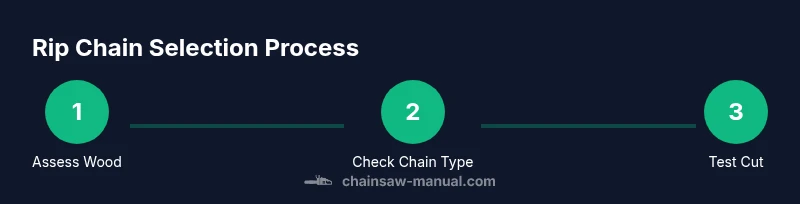
Assess the work area and wood
Inspect the log for knots, checks, and moisture. Determine whether ripping is appropriate and identify potential pinch points. This assessment sets the stage for safe, efficient cutting and helps you select the correct chain and bar setup.
Tip: Check for loose bark or nails embedded in the log; remove them before cutting. - 2
Select the ripping chain
Choose a dedicated ripping chain with geometry optimized for straight cuts. Ensure the chain pitch matches your bar and that you understand how the tooth design will interact with the wood you're cutting.
Tip: If in doubt, start with a shorter test cut on scrap to verify bite. - 3
Verify bar compatibility and tension
Confirm chain pitch and gauge match the bar groove. Tighten the chain so it has a slight sag when the bar is parallel to the ground and test its movement by hand.
Tip: A properly tensioned chain reduces wear and improves tracking. - 4
Mount the chain and adjust tension
Install the ripping chain according to the manufacturer’s instructions and recheck tension after a few slow hand spins. Ensure there is no excessive slack mid-span.
Tip: Always remove the spark plug boot before handling a rotating chain for safety. - 5
Make a shallow test cut
Begin with a shallow pass on a scrap log to confirm tracking and bite. Observe whether the chain pulls to one side or binds, and adjust accordingly.
Tip: Stop if you hear unusual grinding or see excessive heat buildup. - 6
Proceed with controlled ripping cuts
Feed smoothly with steady pressure while keeping the bar aligned for straight cuts. Avoid forcing the saw; let the chain do the work with a consistent rhythm.
Tip: Take brief pauses to clear debris and inspect chain wear after several passes. - 7
Finish and maintenance
Remove the log and clean the bar groove and drive links. Oil the chain and bar, then store the saw in a dry place after ensuring all components are clean and dry.
Tip: Sharpen or replace worn teeth promptly to maintain cutting efficiency.
FAQ
What is a ripping chain and how does it differ from other chains?
A ripping chain is designed for long, straight cuts with tooth geometry that reduces resistance and prevents pinching. It differs from general-purpose chains by aiming for stability and cleaner edges in rip cuts.
A ripping chain is built for long, straight cuts; it resists pinching better than standard chains and helps keep lines clean.
Can I use a standard chain for ripping?
Standard chains can cut, but they may heat up faster and wander during ripping. For best results, use a chain specifically labeled for ripping when performing long, straight cuts.
Standard chains work, but a ripping chain usually gives better control and consistency for long cuts.
Is ripping with a chainsaw safe?
Ripping with a chainsaw can be safe when you follow PPE guidelines, maintain chain tension, and use proper technique. Always plan cuts, stabilize stock, and stay aware of kickback risks.
Yes, with proper safety gear, technique, and chain maintenance.
What bar length should I use for ripping?
Bar length should match the wood size and task. Longer bars can improve stability for long cuts, but ensure your saw can handle the load and cooling requirements.
Choose a bar length suitable for the log size and your saw’s capability.
How often should I sharpen a ripping chain?
Sharpen as needed based on performance. If bite diminishes or cutting requires more effort, re-sharpen or replace worn teeth.
Keep the chain sharp; sharpen when performance drops.
Watch Video
The Essentials
- Choose a ripping chain designed for long, straight cuts.
- Check bar and chain compatibility before mounting.
- Maintain proper tension and lubrication throughout ripping.
- Use safe cutting technique and PPE to prevent injury.
- The Chainsaw Manual team recommends following manufacturer guidance for best results.