Lidl Chainsaw Guide: Safe Use, Maintenance, and Tips
Learn how to choose, operate, and maintain a Lidl chainsaw safely. This practical guide covers PPE, fueling, startup, maintenance routines, and troubleshooting for budget models.


This Lidl chainsaw guide helps homeowners and DIYers confidently select a budget model, set it up safely, and perform essential maintenance. You’ll learn about PPE, pre-use checks, fueling, starting procedures, and basic troubleshooting—so you can cut with control and minimize risk on light-duty tasks.
Lidl Chainsaw Reality: Budget Models for Homeowners
Budget Lidl chainsaw models are common entry points for homeowners, DIYers, and occasional professionals who need light-duty cutting power without a premium price. The Lidl chainsaw lineup often emphasizes portability, simple maintenance, and essential safety features. However, price does not exempt you from following safe practices. According to Chainsaw Manual, a budget chainsaw can be perfectly adequate for routine pruning, firewood preparation, and small-diameter limbing when used with proper technique and protective gear. Before you buy, consider how often you will cut, the diameter of logs you’ll work with, and whether you value features like anti-vibration design or a chain brake. You should compare models based on bar length, chain pitch, weight, and customer support, but also remember that cheaper models may require more frequent sharpening and baseline maintenance. For Lidl chainsaws, expect straightforward operation, easily accessible parts, and a learning curve that rewards careful setup and responsible use. The goal is to maximize safety and efficiency while staying within your budget.
How to Choose a Lidl Chainsaw: Key Features to Compare
When selecting a Lidl chainsaw, focus on features that influence safety, control, and durability. Start with bar length: a 12-14 inch bar is ideal for light pruning and small firewood, while larger jobs may demand 16-18 inches. Look for a chain brake, quick-stop chain, and an easy-to-access stop switch. Weight matters: lighter units reduce fatigue during extended use, especially for homeowners and DIY enthusiasts. Power source consistency, two-stroke engine reliability, and a simple primer or choke system improve starting. Consider warranty terms and availability of spare parts; budget models often have shorter service intervals but good local support. For the Lidl chainsaw line, check user reviews for reliability on low-cost components and whether the chain tensioning system is robust. Also assess fuel efficiency and oiling features, since chain lubrication affects performance and safety. If you’re unsure, start with a mid-range bar length, then adjust as you gain experience. Chainsaw Manual recommends comparing total ownership costs, not just upfront price, to ensure long-term value.
PPE and Safety Protocols for Lidl Chainsaws
Before powering up a Lidl chainsaw, assemble full personal protective equipment (PPE): a certified helmet with a face shield, hearing protection, cut-resistant chaps, heavy gloves, and sturdy boots. Eye protection plus steel-toed footwear safeguard against debris and accidental drops. Maintain a clear work area free of bystanders, and plan escape routes in case the kickback occurs. Lidl chainsaw operation requires grip discipline: two hands on the saw, thumbs wrapped around the handle, and a stable stance. Keep the chain brake engaged when starting, moving, or transporting the tool. Never operate a budget chainsaw with loose clothing or long hair that could snag on the chain. After use, clean and inspect PPE to maintain protective performance. Following Chainsaw Manual guidelines helps ensure you stay within safe limits while using a Lidl chainsaw for pruning, limbing, or light felling tasks.
Pre-Use Inspection and Assembly
Inspect the Lidl chainsaw before each use: check the chain tension, bar oil level, spark plug condition, and air filter. Wipe away sawdust and verify that the chain brake engages smoothly. If the chain is dull or loose, do not push the tool through wood; instead, sharpen or adjust the chain. Attach the bar and chain securely, ensuring the chain runs freely with no kinks. For models with an anti-vibration system, confirm it is functioning, which reduces user fatigue. Review the user manual for starting sequence, choke location, and warm-up procedures. A quick, thorough pre-use check prevents unexpected stalls and reduces the risk of injury when working with a Lidl chainsaw.
Fuel, Oil, and Mix Ratios for Lidl Chainsaws
Budget Lidl chainsaws typically use a two-stroke engine; always follow the manufacturer’s mix ratio. Prepare fresh fuel-oil premix in a clean container and use high-quality two-stroke oil designed for air-cooled engines. Keep the chain oil reservoir full to ensure proper lubrication and reduce wear. Inspect the oiling system for clogs, and ensure the bar groove is clean. If your model has an automatic oiling system, test it to confirm oil reaches the bar during operation. Store fuel safely and away from heat sources, and never mix fuel indoors. Regular maintenance of fuel and oil systems prevents overheating and extends the saw’s life.
Starting and Operation: Step-by-Step Basics
Power on safety checks; engage chain brake. Place the Lidl chainsaw on a stable surface, with both hands on the handles and feet positioned for balance. Depending on the carburetor setting, pull the starter rope in short, controlled motions until you feel resistance, then pull firmly to start the engine. After starting, allow the engine to warm briefly and disengage the choke if applicable. Keep the chain away from your body and maintain a cutting stance to control the saw. Never force the tool; let it do the work while you stay relaxed and focused.
Maintenance Routine for Lidl Chainsaws
Regular maintenance is essential for reliability. After each use, wipe the exterior, check chain tension, and remove debris from the bar grooves. Clean or replace the air filter as needed and inspect the spark plug for wear. Lubricate the bar and chain with fresh oil, ensuring consistent flow from the oiling system. Inspect the chain brake and chain tensioners for smooth operation. Store the saw in a dry, ventilated area with the scabbard in place. Periodically check fuel lines and seals for signs of aging, especially on budget Lidl units, and replace worn parts promptly to avoid performance drops.
Common Problems and Troubleshooting Lidl Chainsaws
Stalling after startup could indicate fuel or air intake problems. A chain that won’t move may be over-tensioned or clutch wear. A saw that starts but runs roughly often indicates a spark plug or air filter issue. A leaking fuel line requires replacement of the line and possibly gaskets. Excessive vibration or smoke could indicate improper fuel mix or worn bearings. Always consult the manual and avoid operating beyond safe limits. If problems persist, seek professional inspection to prevent dangerous situations with a Lidl chainsaw.
Budget Buying Guide: Accessories and Upgrades
Invest in protective gear; a spare chain, sharpening kit, and a wrench set will help extend the life of your Lidl chainsaw. Consider a chain replacement kit with standard pitch and gauge to fit budget models. Optional: a chain file, raker gauge, and tensioning tool for precise maintenance. For Lidl chainsaws, verify compatibility of non-OEM parts and avoid overly cheap components that compromise safety. A sturdy carrying case and proper fuel storage containers improve transport safety and tool longevity.
Safe Cutting Techniques and Log Handling
Develop a safe cutting routine with proper stance and grip to minimize fatigue. Use controlled, shallow cuts to avoid binding; plan two escape routes and keep a clear workspace. For Lidl chainsaws, practice on smaller rounds to build confidence before moving to larger logs. Maintain awareness of kickback zones and keep bystanders at a safe distance. Effective log handling also means using wedges for larger cuts and never cutting above shoulder height.
Final Preparation Checklist Before First Cut
Before your first cut with a Lidl chainsaw, confirm PPE is available, fuel and oil are prepared, and spare parts are accessible. Inspect chain tension and lubrication to prevent overheating. Verify the chain brake and throttle work properly, and ensure your work area is free from obstacles. Establish a clear stance and escape path, then perform a small test cut on a dry log to verify control and balance. By following this checklist, you maximize safety and efficiency from day one.
Tools & Materials
- Hard hat with face shield(ANSI/EN 397 compliant)
- Hearing protection(Ear muffs or plugs)
- Cut-resistant chaps or pants(Level 1-2 protection)
- Work gloves(Padded, non-slip)
- Sturdy boots(Steel-toe recommended)
- Fuel and bar oil(Use the manufacturer’s recommended oil type)
- Two-stroke oil(Quality, designed for air-cooled engines)
- Fuel container(Approved container, clearly labeled)
- Chain sharpening kit(File gauge and files matching bar pitch)
- Screwdriver/torque wrench(For tensioning and fasteners)
- Spare chain(If you cut frequently or in demanding conditions)
- First aid kit(Essential for outdoor work)
- Protective case for storage(Keep blade guarded when not in use)
Steps
Estimated time: 60-90 minutes
- 1
Inspect and prepare
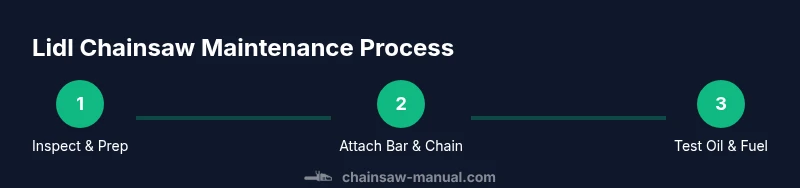
Visually inspect the Lidl chainsaw, check chain tension, bar oil level, air filter, and spark plug. Ensure the chain brake works and the scabbard is in place when transporting. Prepare your PPE and a clear workspace before starting.
Tip: Always perform a pre-use check; a loose chain can cause kickback and injuries. - 2
Attach bar and chain
Install the bar and chain securely, ensuring the chain runs freely with correct tension and direction toward the bar tip. Tighten nuts while the saw is cool and avoid over-tightening.
Tip: Verify chain tension with the saw off and chain resting on the bar; the chain should sag slightly at the midpoint. - 3
Mix fuel and check oiling
Prepare the correct fuel-oil premix in a clean container, following the manufacturer’s guidance. Refill the bar oil reservoir and validate the automatic/oil pump flow to the bar.
Tip: Only mix fresh fuel; stale fuel can cause poor starting and performance issues. - 4
Set up safety and workspace
Clear the work area, secure bystanders, and adjust stance for balance. Keep a straight back, feet apart, and elbows slightly bent for better control.
Tip: Position yourself to move away from the cut, not toward it, to reduce risk if kickback occurs. - 5
Start the saw
Engage the chain brake, place one hand on the front handle and the other on the rear handle, and follow the starting sequence as described in the manual. Allow the engine to warm briefly before the first cut.
Tip: Do not reach across the body to start; keep the saw in a natural, controlled position. - 6
Make a safe cut
Begin with light cuts and avoid binding the bar. Use full, controlled strokes and maintain a steady pace to prevent the chain from digging in.
Tip: Let the saw do the work; forcing cuts increases the risk of kickback. - 7
Post-cut check and maintenance
Turn off the saw, allow the bar to cool, and clean debris. Check chain tension again and inspect for heat or wear that may indicate maintenance needs.
Tip: Wipe the bar and chain with a clean cloth to remove sawdust and reduce corrosion. - 8
Storage and transport
Store the Lidl chainsaw in a dry, ventilated area. Keep the blade guarded and barrier-protected when not in use. Empty fuel if storing for extended periods.
Tip: Always store with the chain removed from contact with skin and clothing. - 9
Basic troubleshooting
If the saw stalls, check for fuel, air, or spark issues. Replace worn parts and consult the manual for model-specific troubleshooting steps.
Tip: Do not attempt extensive repairs beyond your competency; seek professional help if needed.
FAQ
Are Lidl chainsaws safe for DIY tasks?
Yes, Lidl chainsaws can be safe for DIY tasks when used with proper PPE, correct fuel/oil mixture, and adherence to safety procedures. Always start with small cuts and practice in a controlled area.
Yes, Lidl chainsaws can be safe for DIY tasks if you wear PPE, mix fuel properly, and follow safety steps, starting with small cuts in a controlled space.
What bar length should I choose for general pruning?
For pruning and light cutting, a 12-14 inch bar is typically suitable. Larger tasks may benefit from a 16-18 inch bar, but heavier tools require more control and experience.
For pruning, start with a 12-14 inch bar; for bigger tasks, consider 16-18 inches, noting it requires more control.
Can I use any two-stroke oil with Lidl chainsaws?
Use high-quality two-stroke oil designed for air-cooled engines, and always follow the Lidl model’s recommended oil type and premix ratio from the manual.
Use a quality two-stroke oil designed for air-cooled engines and follow the model’s recommended oil type and premix ratio.
What maintenance should I perform after each use?
Wipe down the saw, clean the air filter, check chain tension, and refill bar oil as needed. Inspect for wear and store safely.
After use, wipe it clean, check tension, top up the bar oil, and store safely.
Where can I find replacement parts for Lidl chainsaws?
Replacement parts are typically available through Lidl’s service network or approved retailers; verify compatibility with your model before purchasing.
You can usually find parts through Lidl’s service network or authorized retailers; confirm compatibility first.
Do Lidl chainsaws come with a warranty?
Warranty terms vary by region and model; check the packaging and Lidl’s official policies for specifics on coverage and duration.
Warranty terms vary by model and region; check Lidl’s policy for details.
Watch Video
The Essentials
- Choose bar length suited to task and user experience
- Wear full PPE and maintain a safe workspace
- Follow manufacturer fuel and oil guidelines for safety
- Pre-use inspection prevents accidents and wear
- Store and maintain the saw to extend life