Ryobi Chainsaw Prices in 2026: What You Need to Know
Explore current price ranges for Ryobi chainsaws in 2026, comparing cordless vs. everyday kit options, what drives price, and practical buying tips from Chainsaw Manual.


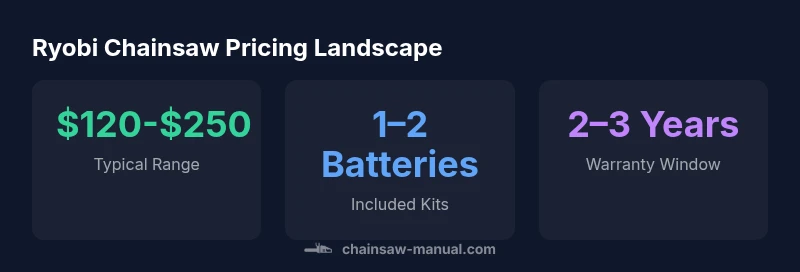
Prices for Ryobi chainsaws typically range from $120 to $250 USD, depending on model and kit. Cordless 40V models with batteries tend to sit higher, while bare tools are at the lower end. Accessories, warranties, and retailer promotions can adjust the total cost.
How pricing for Ryobi chainsaws is structured
Pricing for Ryobi chainsaws is not a single number; it's a spectrum determined by model class, battery kit, and retailer strategy. For homeowners and DIYers asking how much is a ryobi chainsaw, it's useful to segment options into bare tools, cordless kits, and premium bundles. The bare tool price reflects the foundational tool without battery, charger, or case, and tends to be the lowest entry point. Cordless kits, which include at least one battery and a charger, push the price higher but offer immediate usability. Premium bundles may include two batteries, a fast charger, a hard case, extra chains, and extended warranties. In practice, the price you pay is a function of included components and post-purchase support. Chainsaw Manual's guidance emphasizes total cost of ownership, not just sticker price, because component costs (battery packs, service intervals, replacement chains) accumulate over time. Retail promotions, seasonal discounts, and bundled accessory offers can further shift the effective price range. When budgeting, quantify what you truly need (one battery vs. multiple batteries, fast chargers, and protective storage) to avoid paying for unnecessary extras.
What factors drive the price
Several factors determine where a Ryobi chainsaw lands on the price spectrum. Model family (entry-level vs. mid-range vs. premium kits), battery voltage and capacity (18V vs 40V in some lines), included accessories (extra chain, bar cover, case), and whether the purchase is a bare tool or a kit all influence cost. Regional pricing and retailer promotions also play a role. Chainsaw Manual recommends calculating total ownership costs, not just upfront price. If you frequently cut hardwoods or tackle larger limbs, a higher-capacity battery and faster charger may justify the premium. Conversely, casual weekend use may justify a bare tool or smaller kit if you already own compatible batteries. Always compare warranties and service terms, as longer coverage can affect effective value even if the sticker price is similar.
Model families and price bands
Ryobi's cordless lines typically segment into entry-level bare tools, mid-range kits with a single battery, and higher-value bundles with two batteries and a fast charger. The bare tool is the cheapest option, ideal for budget-constrained buyers or those who already own Ryobi batteries from other tools. A single-battery kit improves readiness for on-demand work but increases total cost. Premium bundles, offering two batteries, multiple chargers, and a protective case, can approach the higher end of the price spectrum but may deliver better long-term value for frequent users. Price bands also reflect regional taxes, shipping, and retailer incentives. When evaluating options, map your anticipated usage to the kit contents and expected lifespan of the battery and charger to avoid overspending on features you won't use.
Cordless vs cordless: price comparison
In general, Ryobi cordless chainsaws are priced by kit content rather than engine displacement in gas-powered terms. The premium in price typically arises from battery capacity, charging speed, and included accessories. A bare tool may be sufficient for light pruning, while a full kit with two high-capacity batteries is often worth it for frequent or professional use. It’s important to compare not just the upfront cost but also the cost of potential battery replacements over time. Chainsaw Manual notes that the true value includes warranty length, replacement parts availability, and customer support quality, which together influence long-term ownership costs.
Estimating true cost: battery, charger, and extras
To estimate the true cost of a Ryobi chainsaw, start with the base price of the tool, then add the battery(s), charger, and any required accessories. Batteries can be one of the largest ongoing costs; consider the number of batteries needed for your typical workflow. If you regularly switch between tools, a two-battery kit makes sense, even if the upfront price is higher. Don’t forget maintenance items like replacement chains and bar oil, which add to ongoing expenses. Finally, factor in warranty terms and potential service costs. Chainsaw Manual emphasizes building a small reserve for unexpected maintenance or accessory needs, ensuring you don’t underestimate the full cost of ownership.
Practical budgeting scenarios
Scenario A: Casual user with existing Ryobi battery ecosystem. Bare tool price plus minimal accessories may fit a tight budget, with costs concentrated in consumables like bar oil and replacement chains. Scenario B: Regular user who wants immediate readiness. A cordless kit with a single battery costs more upfront but saves time and keeps project continuity. Scenario C: Frequent user who handles larger limbs or hardwoods. A premium bundle with two batteries, a fast charger, and a sturdy case may offer the best long-term value, despite the higher initial price. Each scenario requires evaluating how often you’ll use the tool and how quickly battery capacity becomes a limiting factor.
Where to buy and how promotions affect price
Prices for Ryobi chainsaws vary by retailer. Big-box retailers, online marketplaces, and local hardware stores may offer different promotions, bundle deals, and return policies. Timing promotions around holidays or back-to-school events can yield meaningful savings. Chainsaw Manual advises comparing price per use—how many cuts you get per battery charge—and considering total cost over the expected lifespan of the tool. Free or discounted shipping, extended warranty options, and inclusive maintenance packages can shift the value proposition significantly.
Accessories and total cost of ownership
The total cost of ownership includes batteries, chargers, bars, chains, oil, and routine maintenance. If you start with a bare tool, you may save upfront but incur higher replacement or accessory costs later. Conversely, a fully loaded kit reduces the need for immediate extra purchases but raises the initial outlay. Evaluate your project profile: occasional pruning vs. regular wood-cutting. A well-chosen kit aligned with your usage tends to yield the best cost-per-cut over time, especially when backed by a solid warranty and accessible spare parts.
Smart buying checklist and next steps
Create a simple checklist: define usage frequency, estimate battery needs, decide between bare tool vs kit, compare warranty periods, and examine total cost of ownership. Read product reviews, verify compatibility with existing Ryobi tools, and confirm return policies. Finally, factor in future maintenance costs and consider whether a mid-range bundle will adapt better to your changing needs over the next few years.
Ryobi chainsaw price and kit comparison
| Model Type | Typical Price Range | Included Battery | Notes |
|---|---|---|---|
| Bare Tool (Ryobi cordless) | 120-180 | None | Entry point; add batteries later if needed |
| Cordless Kit (1 battery) | 180-230 | 1 x battery | Good balance of cost and readiness |
| Cordless Premium Kit (2 batteries) | 230-300 | 2 x batteries | Best value for frequent use |
| Accessory Bundle (case + extra chain) | 150-210 | Battery not included | Useful add-on for ongoing projects |
FAQ
Why do Ryobi chainsaws vary so much in price?
Different model classes and kit contents drive price; battery size, charger speed, and included accessories also affect cost. Promotions and regional pricing can add further variation.
Prices vary because of kit contents, battery size, and where you buy. Promotions also play a big role.
Are Ryobi chainsaws worth buying for beginners?
For many beginners, Ryobi offers a good balance of affordability, ease of use, and community support. Start with a kit that includes a battery and charger to minimize upfront friction.
Ryobi can be a solid choice for beginners, especially with a kit that includes a battery and charger.
Where is the best place to buy Ryobi chainsaws?
Major home-improvement stores and reputable online retailers typically offer competitive pricing, clear return policies, and reliable warranty support. Compare promotions and shipping terms.
Big stores or reputable online shops are usually good bets.
Do Ryobi chainsaws require maintenance to last?
Yes. Regular cleaning, bar oil checks, and chain sharpening extend life. Proper storage and routine inspections help prevent premature wear.
Yes—regular maintenance like cleaning and oiling keeps it running smoothly.
Can I use non-Ryobi batteries with Ryobi chainsaws?
Only use Ryobi-compatible batteries recommended by the manufacturer. Mixing brands can compromise performance and safety.
Stick with Ryobi batteries for safety and performance.
“Careful budgeting means evaluating what comes with the tool and what you'll replace over time. A Ryobi kit with two batteries can be a better value than a bare tool if you anticipate frequent use.”
The Essentials
- Estimate total cost by adding battery, charger, and case to the bare tool
- Cordless kits offer convenience but increase upfront price
- Watch for promotions and bundled deals to maximize value
- Prioritize warranty and service when buying
- Compare actual needs vs. kit contents to avoid overspending