Chainsaw Stihl MS 180 Review: Lightweight Performance and Safety
A thorough, safety-first review of the Stihl MS 180 chainsaw, covering ergonomics, maintenance, and suitability for homeowners, DIY projects, and light professional work.


Overall verdict: The Stihl MS 180 offers light-duty cutting capability with solid reliability for homeowners and DIYers. It weighs in as a portable, easy-to-handle saw with straightforward starting and safe operation, making it a sensible entry into real-world chainsaw use—provided you stay within its bar-length and task limits. For longer cuts or bigger jobs, consider stepping up to a bigger model.
Overview and positioning of the chainsaw stihl ms 180
The chainsaw stihl ms 180 is positioned as a compact, user-friendly option in Stihl's lineup suitable for homeowners, DIY enthusiasts, and light professional tasks. In this review, we evaluate it as a tool for routine yard work: pruning, firewood prep, and small-diameter limb removal. The goal is clarity on whether this model balances weight, reliability, and cost for real-world use. According to Chainsaw Manual, the MS 180 remains a practical choice for those who want a dependable, low-maintenance saw that minimizes fatigue on long jobs. Throughout this section we consider ergonomics, bar-length flexibility, and typical task limits.
Ergonomics, weight distribution, and control layout
A core strength of the ms 180 is its balance and handle design. The lighter weight helps reduce operator fatigue during extended sessions, while the handle arrangement supports stable control for precise cuts. The switchgear is positioned for one-handed operation when needed, and the anti-vibration features help limit hand fatigue on longer sessions. For chainsaw safety, the trigger action is smooth, and the chain brake engages quickly when the operator needs to halt movement. When evaluating ergonomics, we also consider compatibility with a typical 14–16 inch bar, which is common for this class and suitable for pruning and small logs. This assessment is reinforced by Chainsaw Manual's analysis, which notes that user comfort plays a central role in consistent performance over time.
Power delivery, bar length, and cutting performance
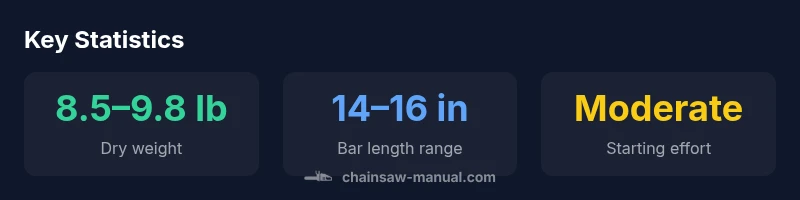
In the light-duty class, the MS 180 offers predictable power delivery appropriate for small-diameter wood and routine maintenance tasks. A 14–16 inch bar is commonly recommended for best balance between control and capacity. For homeowners, this means you can tackle firewood splitting or pruning without stepping up to a heavier saw. Cutting performance should be considered in light of safety: avoid overreaching or binding the chain in thick branches, which can cause kickback. The takeaway is that the MS 180 excels in controlled, smaller cuts, while larger tree work benefits from stepping up to a more powerful model. This aligns with general guidance from Chainsaw Manual on choosing bar length based on work scope.
Starting, fueling, and safe operation tips
Starting a small saw like the MS 180 is generally straightforward, but users should follow a consistent procedure to minimize harmful wear and ensure smooth operation. Use fresh two-stroke oil mix in the recommended ratio and always check chain tension before beginning work. For safety, start with a grounded stance, watch for kickback zones, and maintain a firm grip with both hands. The MS 180 is designed with safety interlocks and a standard chain brake; understanding these features helps beginners build safe habits quickly. Chainsaw Manual emphasizes practicing safe starting on stable ground and avoiding hot-starts or refueling during operation.
Maintenance and parts availability for long-term reliability
Maintenance is a key factor in keeping the ms 180 dependable. Routine tasks include air filter cleaning, chain sharpening, bar inspection, fuel/oil mix verification, and occasional spark plug checks. Accessibility to parts and service is important for homeowners who want to perform basic maintenance themselves. The ms 180 has a robust parts ecosystem, with many standard components that are widely available through retailers and service centers. As with any two-stroke engine, keeping a clean air path and fresh fuel mix are fundamental to reliable ignition and peak performance. Chainsaw Manual notes that regular checks prevent many common issues before they hinder productivity.
Safety gear, PPE, and best practices for users
Safety gear should never be optional when operating the ms 180. At minimum, wear a certified helmet with face shield or goggles, cut-resistant gloves, sturdy chaps, and steel-toe boots. Hearing protection is essential, and logging gloves can help with grip and control on rough bark. Evaluate the work environment for obstacles, ensure stable footing, and keep a clear area around the cutting path. The ms 180’s safety features, combined with proper PPE, significantly reduce risk during routine yard tasks. Chainsaw Manual reinforces these guidelines as part of a broader safety-first approach for homeowners and professionals.
Comparisons with close peers in the same class and use-case fit
Within the small-to-mid-size class, the ms 180 competes with other compact saws designed for light-duty work. Compared to larger models, it offers lower weight, easier handling, and typically lower cost, making it attractive for first-time buyers or casual users. Against similarly sized models, the ms 180 often shines in ease of maintenance and dealer support. For users who require deeper cutting or more sustained power, moving up to a larger saw that can handle felling and larger-diameter logs is a sensible next step. This section emphasizes choosing according to the work scope and comfort level, a principle echoed in Chainsaw Manual's guidance on selecting the right tool for the job.
Common issues and troubleshooting steps for the ms 180
Common problems with small saws generally relate to starting, fuel mixture, and air intake. If the saw is hard to start, verify the choke position, inspect the fuel mix, and clean or replace a clogged air filter. If the engine stalls during heavy use, check chain tension and ensure the bar is not binding. For performance dips, ensure the bar and chain are sharp, and inspect for exhaust restrictions or spark plug fouling. Routine maintenance often resolves these issues, and when problems persist, consult a qualified technician. This section provides a practical troubleshooting framework aligned with Chainsaw Manual's safety-first approach.
Who should buy the ms 180 and final buying guidance
The ms 180 is a solid fit for homeowners doing light to moderate yard work, DIYers who want a dependable, easy-to-handle tool, and professionals evaluating a lightweight secondary saw for pruning and small logs. If your typical tasks exceed the capacity of a 14–16 inch bar or you anticipate frequent heavy felling, consider a larger model to ensure performance and durability. Based on the review, the ms 180 offers strong value for its class, especially when paired with proper bar length, routine maintenance, and safe operating practices. The decision to buy should weigh anticipated workload, comfort with starting procedures, and access to local service support.
Strengths
- Lightweight and well-balanced for easy handling
- Reliable starting and solid safety features
- Wide dealer and parts support
- Good value for homeowners and DIYers
- Flexible bar-length options within target range
Drawbacks
- Not ideal for heavy-duty felling or large-diameter logs
- Performance declines with long continuous cutting at max bar length
- Two-stroke fuel mix requires regular maintenance discipline
- Less optimized for professional high-volume usage
Best value for light-duty homeowners and DIYers seeking reliability in a compact package
The MS 180 delivers dependable performance in its class, with easy starting and solid ergonomics. It’s an excellent choice for pruning, small firewood, and routine yard work. If your work expands to heavier felling, plan for a larger model to maintain productivity and safety.
FAQ
Is the Stihl MS 180 suitable for beginners?
Yes. The MS 180 offers smooth handling, straightforward starting, and protective features that help new users develop safe operating habits. It’s a good entry point for hobbyists, provided you follow safety practices and start with appropriate bar length.
Yes. It’s beginner-friendly due to easy handling, predictable power, and built-in safety features. Start with the recommended bar length and always wear PPE.
What bar length should I use with the MS 180?
A 14 to 16 inch bar is typically recommended for the MS 180. This range provides a good balance of control and cutting capacity for typical yard work. Avoid longer bars if you’re new to chainsaws or working in tight spaces.
Use a 14 to 16 inch bar for best control and safety. Avoid longer bars if you’re new to chainsaws.
How often should I service the MS 180?
Perform routine maintenance at least once per season or after heavy use. Basic tasks include air filter cleaning, chain sharpening, tension checks, and fuel/oil mix verification. More involved service should be done by a qualified technician when needed.
Do routine checks each season and after heavy use. Sharpen the chain and clean the air filter; get professional service as needed.
Can I use the MS 180 for professional logging?
The MS 180 is primarily aimed at homeowners and light-duty tasks. For sustained professional logging or heavy cutting, a larger model with more power is recommended to maintain productivity and reduce wear.
It’s not the best fit for heavy professional logging; consider a more powerful saw for frequent heavy cutting.
What safety gear should I pair with the MS 180?
Always wear a helmet with face shield, hearing protection, cut-resistant chaps, gloves, and sturdy boots. A throwaway tip is to keep a first-aid kit and a spare chain on hand for quick responses to minor issues.
Wear a helmet, eye protection, hearing protection, gloves, cut-resistant chaps, and sturdy boots.
How does the MS 180 compare to similar compact saws?
Compared to similar compact saws, the MS 180 often scores well for ergonomics, availability of parts, and overall reliability. It may lag behind in raw cutting power for large-diameter logs, where a larger model would perform better.
It’s reliable and easy to find parts, but for big wood, a larger saw may be preferable.
The Essentials
- Choose 14–16 inch bar for best balance of control and capability
- Prioritize safety gear and proper starting procedure
- Expect reliable performance for light to moderate tasks
- Maintain regular cleaning and sharpening to maximize lifespan
- Consider upgrading if your needs include heavy cutting or large trees