Chainsaw Like Tools: A Comprehensive Side-by-Side Buying Guide
Compare gas, electric, and battery chainsaw like tools with a practical, safety-first approach. Chainsaw Manual guides you through power, runtime, weight, and maintenance to help you pick confidently.


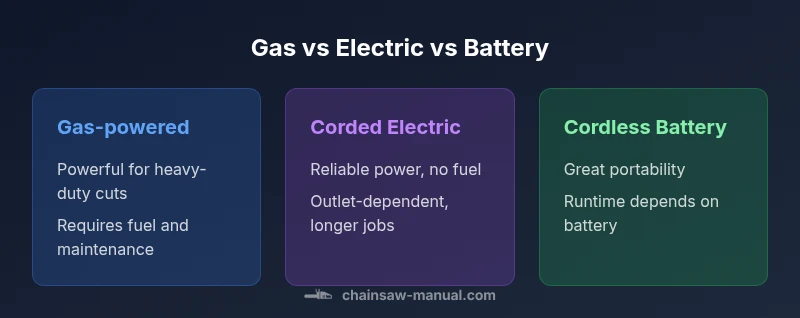
When choosing chainsaw like tools, your decision hinges on workload, noise tolerance, and maintenance willingness. Gas-powered variants deliver raw cutting power for heavy wood and long sessions; corded electric tools offer reliable, low-maintenance performance but require a power outlet; cordless models balance portability with practical runtime for most home projects. Consider safety features, weight, and price when evaluating options.
Understanding Chainsaw Like Tools in the Home Shop
According to Chainsaw Manual, homeowners often treat a tool that cuts wood with a chain as a family of devices, not a single model. The Chainsaw Manual team found that the core difference among gas-powered, corded electric, and cordless/battery options is how power is delivered, how long you can work between refueling or recharging, and how much weight you can bear through a long session. In practical terms, the right tool depends on the job at hand, the work environment, and your safety practices. This article uses the phrase "chainsaw like tools" to emphasize that you may be shopping for devices that resemble chainsaws in form and function, but vary in powertrain, runtime, and maintenance needs. For homeowners and professionals alike, aligning your choice with project scale—and your tolerance for noise, fumes, and upkeep—prevents missteps and improves safety outcomes. The Chainsaw Manual team recommends evaluating the total cost of ownership, including fuel or charge cycles, chain oil, and routine servicing, before purchasing.
Power Sources and What They Mean for Your Projects
Power source is the defining axis for chainsaw like tools. Gas-powered models deliver peak cutting performance, especially in demanding, extended-work scenarios such as land clearing or heavy timber work. They run on a fuel mix, require regular maintenance, and can deliver long operating times between refuels. Corded electric tools draw steady power from an outlet, delivering consistent performance with minimal-maintenance requirements and zero fuel handling. They excel in well-lit, shop-based tasks where a cord limitation is acceptable. Cordless/battery-powered tools prioritize portability and instant-start capability, making them ideal for pruning, limb work, and remote-site projects. Battery technology continues to improve, balancing weight, runtime, and charging times. When choosing, consider your typical project profile, access to power, and the importance of quiet operation.
Performance, Cut Quality, and Duty Cycles
In terms of performance, gas-powered chainsaw like tools provide the fastest cutting under load, handling branchy material and larger diameters with ease. Electric variants offer smooth, steady power with fewer vibrations, making them favorable for cleaner cuts in a controlled workspace. Battery-powered tools strike a middle ground, delivering adequate performance for most home tasks without the fumes and odor of gas models. Duty cycle matters: long, uninterrupted sessions favor gas units; frequent power outages or outdoor work near inhabited spaces favor electric or cordless solutions, especially when paired with a spare battery. The Chainsaw Manual approach emphasizes testing a model for surge response, chain speed consistency, and burn-in during break-in periods to ensure stable performance.
Weight, Ergonomics, and Handling
Weight distribution and grip ergonomics influence fatigue and control. Gas-powered tools tend to be heavier, with more vibration, which can tax wrists and shoulders over long shifts. Corded electric tools are usually lighter than gas models but can feel cumbersome if the cord adds drag during guiding maneuvers. Cordless models emphasize balance and reduced vibration, improving comfort for extended use; however, battery weight can become noticeable on small-framed users. Ergonomics go beyond weight: consider handle shape, anti-vibration systems, and trigger design. A proper setup includes anti-slip gloves, a sturdy stance, and regular checks of chain tension and bar alignment for safer operation.
Maintenance, Durability, and Upkeep
Maintenance requirements vary across tool types. Gas-powered chainsaw like tools demand fuel management, spark plug checks, air filter cleaning, and chain oil replenishment. Electric corded tools require less routine maintenance but still need chain oil, bar and chain inspection, and plug health checks if applicable. Battery-powered variants need care for the battery pack, charging equipment, and storage practices to prevent self-discharge and degradation. Regardless of type, routine lubrication, chain tension checks, bar maintenance, and chain replacement when dull are essential. The Chainsaw Manual team notes that keeping a maintenance log helps homeowners schedule preventive service and extend tool life.
Safety First: PPE, Training, and Safe Handling
Safer operation starts with personal protective equipment (PPE) and correct handling techniques. Eye and hearing protection, cut-resistant chaps, gloves, and a sturdy helmet are essential. Training should cover kickback awareness, safe starting procedures, and proper chain brake use. Regular inspection of the chain, bar, and chain tension reduces the risk of derailments or unpredictable cuts. Chainsaw like tools share basic safety hazards with traditional chainsaws, but each power source introduces specific risks—fuel handling and exhaust in gas units, cord management with electric tools, and battery charging hazards with cordless models. Chain sharpening and tensioning should be part of a routine safety check.
Use Cases and Best Scenarios for Each Type
Gas-powered chainsaw like tools excel in heavy-duty, on-site tasks where access to fuel and a power source is impractical, such as forest clearing or property maintenance without grid access. Corded electric tools are ideal for workshop or yard tasks where a reliable power outlet is available and noise restrictions are lenient. Cordless/battery-powered tools shine for pruning, limb removal, and light construction jobs, especially on remote jobsites or where immediate tool starting is valuable. The best decision follows a clear mapping of project scope, location, and tolerance for noise and fumes. Chainsaw Manual recommends testing a few models to see which aligns with your typical tasks, energy use, and handling comfort.
Total Cost of Ownership and Value: Upfront vs Running Costs
Total cost of ownership includes upfront purchase price, fuel or battery costs, maintenance, and potential repairs. Gas-powered tools typically have higher ongoing costs due to fuel and routine service, but they can offer lower upfront prices for heavier-duty models. Corded electric tools usually have lower ongoing operating costs and no fuel, though the initial price can be moderate. Cordless tools have higher upfront costs due to battery packs, but ongoing costs can be minimized with smart charging practices and battery care. Chainsaw Manual analysis shows that choosing based on your typical worksite and maintenance capacity yields the best value over 3–5 years.
Step-By-Step Evaluation Framework to Choose Your Tool
- Define your primary tasks and typical cut sizes. 2) Assess power needs and access to outlets or fuel. 3) Weigh weight tolerance and ergonomic fit. 4) Estimate maintenance capacity and storage. 5) Compare total costs including fuel, batteries, and parts. 6) Test models for balance, vibration, and control. This framework helps ensure you select a tool that aligns with your workflow, whether you’re a homeowner, DIY enthusiast, or professional.
Feature Comparison
| Feature | Gas-powered chainsaw-like tools | Corded electric chainsaw-like tools | Cordless/battery-powered chainsaw-like tools |
|---|---|---|---|
| Power and Cutting Performance | High and aggressive for heavy-duty timbering | Strong continuous power with consistent output when plugged in | Balanced performance with portability and adequate runtime |
| Run Time / Availability | Long runtimes with fuel; refueling needed for extended work | Unlimited by outlet; limited by cord length and reach | Battery-based; runtime depends on battery capacity and charge times |
| Weight and Ergonomics | Heaviest of the three; higher fatigue risk | Moderate weight; cord management adds some friction | Lightest; optimized for long use and reduced fatigue |
| Maintenance | Fuel system care, air filter, spark plug, chain oil | Low maintenance; chain oil and basic inspection | Battery care, charger considerations, occasional replacement |
| Noise and Vibration | Very loud; higher vibration levels | Moderate noise; minimal fuel odors | Lower noise; vibration present but manageable |
| Price Range | $200-$450 | $120-$350 | $250-$700 |
| Best For | Heavy-duty timbering, remote sites, long sessions | Workshop tasks with available outlets, price-conscious | Pruning, limb work, on-the-go projects |
Strengths
- Gas models deliver top power for demanding cuts
- Corded electric tools offer reliable performance with minimal maintenance
- Cordless tools provide portability and quick startup
- Electric and cordless options reduce fumes and odors
Drawbacks
- Gas models are heavier and noisier with higher vibration
- Corded tools are tethered by cords, limiting range
- Cordless tools have higher upfront cost and limited runtime per battery
Gas-powered chainsaw-like tools stay best for heavy, sustained cuts; cordless options win for portability, and corded electric models suit steady, outlet-connected work.
Gas-powered tools excel in raw power and endurance for tough jobs. Corded electric tools are reliable and low-maintenance where outlets exist. Cordless models balance ease of use and mobility for smaller, frequent tasks.
FAQ
What constitutes a 'chainsaw like tool' and how does it differ from a true chainsaw?
A chainsaw like tool refers to a device designed to cut wood using a chain-driven bar, including variations that resemble a traditional chainsaw but differ in power source and construction. True chainsaws are typically gas-powered or battery-driven, with a carbureted engine or motor, while many 'like' tools may have different housings or safety features. The key distinction is function (wood cutting with a chain) rather than form alone.
A chainsaw like tool cuts wood with a chain and bar, but may differ in power source or design from a traditional chainsaw.
Which type is best for a typical homeowner on a budget?
For budget-conscious homeowners, corded electric models often provide a favorable balance of price, performance, and low ongoing maintenance. They require access to a power outlet and may have cord-management considerations, but upfront costs tend to be lower than cordless options. Gas models may be cheaper upfront but incur higher fuel and maintenance costs over time.
Corded electric tools usually offer good value if you have outlet access and don’t mind the cord.
How do I determine the right power source for my tasks?
Start by evaluating your typical job sites: do you work off-grid or in a shop? If so, gas offers portability and long runtime. If you have reliable outlet access and value low noise, corded electric is sensible. For on-the-go pruning or remote sites, cordless with spare batteries typically provides the best balance of convenience and performance.
Choose based on where you work and how long you need to run between charges or refuels.
What safety gear is essential when using chainsaw-like tools?
Essential PPE includes eye and hearing protection, cut-resistant chaps, gloves, and a helmet with face shield. Maintain a stable stance, check chain tension, and keep hands dry to prevent slips. Always inspect the work area for kickback hazards and have a first aid kit readily available.
Wear eye and hearing protection, gloves, and cut-resistant chaps for safety.
What maintenance steps are common across all options?
Common steps include checking chain tension, lubricating the chain and bar, inspecting the chain brake, and cleaning air vents. For gas models, regular fuel and oil mix checks are necessary; electric tools need battery care and cord checks; cordless models require battery storage and charging discipline. Keeping a simple maintenance log helps track service intervals.
Regular chain tensioning, lubrication, and brake checks keep all options safe and effective.
Are there legal or training considerations when using these tools?
Training is not universally mandated, but proper instruction on safe starting, kickback prevention, and PPE use is strongly advised. Local regulations may require PPE usage in certain settings or workplaces. Individuals should seek reputable safety courses or manufacturer training resources before first use.
Get proper training for safe operation and always wear PPE.
The Essentials
- Assess your workload before selecting a tool
- Favor gas for heavy-duty work, electric for steady power, cordless for portability
- Prioritize ergonomics and anti-vibration features
- Factor in maintenance tasks and fuel or battery costs
- Always follow safety protocols and wear PPE