Chainsaw How to Choose: A Practical Buying Guide
Learn how to choose a chainsaw with safety-first, practical guidance. Compare gas, electric, and battery options, bar lengths, and maintenance costs to pick the right tool for homeowners and pros.


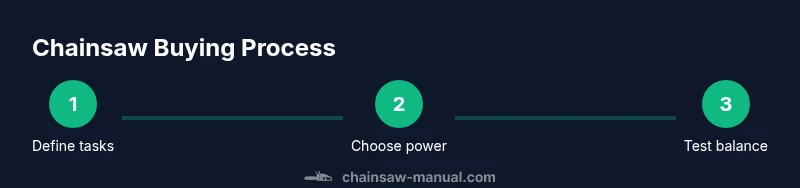
By the end of this guide, you will know how to choose a chainsaw based on task type, power type, bar length, weight, safety features, and budget. Start with your primary use, then compare gas, electric, and battery options, before testing in-store for balance and comfort. This approach keeps safety and efficiency at the forefront.
Key factors that influence your choice
Choosing a chainsaw starts with clarity about your tasks and environment. If you’re wondering how to pick responsibly, you’re solving for safety, control, and reliability. Chainsaw how to choose should balance power with weight, and budget with maintenance needs. According to Chainsaw Manual, begin by listing typical tasks (limbing, pruning, firewood, light felling) and the conditions you work in (weather, terrain, accessibility). Then map those needs to power type, bar length, and safety features. This foundational step prevents overbuying or underpowered performance, and it helps you compare models without bias. As you review options, note that quality parts, easy maintenance, and consistent safety updates often trump flashy features. A thoughtful approach saves time and money over the tool’s lifetime.
Gas vs Electric vs Battery: pros and cons
Power type is the single most consequential decision when you’re learning how to choose a chainsaw. Gas chainsaws deliver high power for heavy tasks and longer runtime, but require more maintenance, fuel management, and regular tuning. Electric corded models are lighter, simpler to operate, and often quieter, ideal for light-duty work around the yard. Battery-powered (cordless) saws offer portability and low noise with increasingly long runtimes, but may require more frequent charging and can struggle with very demanding cuts. When evaluating power types, assess your typical workload, accessibility to outlets, and the tolerance for maintenance. Chainsaw Manual’s guidance emphasizes matching power type to task frequency and toggle between rapid, lighter cuts and sustained heavy cutting as needed.
Bar length and its role in performance
Bar length determines reach and depth of cut, but longer isn’t always better. Shorter bars (for example, a compact yard tool) are lighter and easier to maneuver for pruning and limb removal, while longer bars handle larger diameter wood but add weight and risk. The chainsaw how to choose process should align bar length with your most common tasks and your ability to safely control the saw. Also consider chain pitch and gauge, which influence chain compatibility with bars and chainsaws generally. When in doubt, start with a moderate length and test balance before committing to a model with a longer bar.
Ergonomics, weight, and vibration control
The feel of a saw in your hands matters as much as its specs. A well-balanced chainsaw reduces fatigue during long sessions and improves precision. Weight distribution affects steering and control, particularly on uneven terrain. Vibration dampening reduces operator fatigue and can prevent hand-arms vibration syndrome over time. When you’re evaluating options, hold multiple models with the same bar length to compare grip comfort, throttle response, and overall balance. In practice, the best choice is the one you can confidently maneuver for the tasks you perform most often.
Safety features and PPE you should demand
Before you buy, verify that the chainsaw includes essential safety features: automatic chain brake, chain catcher, and a low-kickback bar option for user-friendly operation. Ensure the saw has a strong chain oiler, good chain tensioning, and a clear, accessible off-switch. PPE is non-negotiable: helmet with face shield, eye protection, hearing protection, cut-resistant gloves, and sturdy boots. Chainsaw Manual recommends verifying that the product comes with a user guide and safety tips, and that you’re comfortable with the emergency stop procedures and maintenance routines.
Maintenance costs and long-term reliability
Choosing a saw also means budgeting for maintenance, parts, and fuel or electricity. Consider availability of replacement bars, chains, chainsaw chains, spark plugs (for gas engines), air filters, and bar oil in your region. Reliability matters; models with widely available parts and robust dealer networks tend to stay in service longer. It’s worth calculating annual maintenance costs, including oil, chain replacements, and occasional professional service. A well-maintained saw costs less over its lifetime than a high-powered model that’s difficult to service.
How to evaluate models in-store and online: a quick checklist
Create a simple evaluation checklist before you shop. Check weight with a scale, test balance with an arm extension, and confirm that the model offers the safety features you expect. Read manufacturer specs and compare bar length, power rating, and chain pitch. If possible, handle the saw in-store to test vibration and ergonomics. When shopping online, compare warranty terms, parts availability, and customer service responsiveness. This structured approach helps you apply the chainsaw buying guide consistently across brands and retailers.
Homeowner vs professional: picking the right tool for the job
For homeowners doing occasional yard work, a lighter, easier-to-maintain saw with good safety features typically suffices. Professionals who cut regularly may prioritize power, durability, serviceability, and a broader parts network. Your environment (wet wood, dense brush, long jobs) often dictates features such as anti-vibration, bar length flexibility, and fuel efficiency. Chainsaw Manual emphasizes matching tool capabilities to job frequency and severity to avoid fatigue and ensure safety on the jobsite.
Common mistakes to avoid when choosing a chainsaw
Avoid buying based on price alone; the cheapest option often costs more in maintenance or safety risk. Don’t overlook safety gear or user training; even the best saw is dangerous without proper PPE and technique. Skipping in-person handling or a test run can mask weight and balance issues you’ll regret on the first long session. Lastly, ignoring replacement parts and dealer support can leave you with a dramatic maintenance snag when repairs are needed.
Tools & Materials
- Personal protective equipment (PPE) – eye protection, hearing protection, gloves(ANSI-rated safety glasses or goggles, ear muffs or plugs, cut-resistant gloves)
- Notebook and pen(For noting task types, power type preferences, and model specs)
- Manufacturer spec sheets or access to product pages(Compare power, displacement, bar length, and warranty)
- Measuring tape or ruler(To assess bar length compatibility with tasks)
- Budget range(Have a defined range to guide model selection)
- Smartphone or tablet with internet access(For quick online comparisons and reviews)
- In-store test model or test video access(If available, test balance and operation before buying)
Steps
Estimated time: 60-90 minutes
- 1
Define your tasks and budget
List the tasks you’ll perform most often (pruning, limbing, firewood) and estimate how frequently you’ll use the saw. Set a realistic budget that accounts for maintenance and safety gear. This step anchors your entire buying decision and helps prevent scope creep.
Tip: Write down your top 3 tasks to keep the decision focused. - 2
Choose power type based on use
Decide between gas, corded electric, and cordless battery options. Each type has trade-offs in power, weight, and maintenance. If you work in remote areas, portability matters; if you have constant access to electricity, a corded model can be very convenient.
Tip: Match power type to how often you’ll use the saw and where you’ll operate it. - 3
Set the bar length and pitch needs
Estimate the wood diameter you’ll cut most often and select a bar length accordingly. Short bars are nimble for pruning; long bars reach bigger limbs but weigh more. Verify chain pitch compatibility with the bar you choose.
Tip: When in doubt, start with a medium bar length and test balance. - 4
Evaluate ergonomics and vibration
Hold multiple models to feel the balance and grip. Pay attention to vibration levels and throttle response. A comfortable saw reduces fatigue and improves control during longer sessions.
Tip: Ask for a hands-on test, if available, before purchasing. - 5
Check safety features and PPE
Confirm automatic chain brake, chain catcher, and anti-kickback options. Ensure a robust carrying case and clear instruction manual. Plan to buy complete PPE and learn safe starting procedures.
Tip: Never operate without full PPE; safety first, always. - 6
Assess maintenance and parts availability
Look up replacement bars, chains, and filters in your area. Check warranty terms and service networks. A model with widely available parts reduces downtime for maintenance.
Tip: Choose a model with a dealer network near you. - 7
Test and compare in-store or via videos
If possible, test the balance, weight, and throttle in-store. If not, watch reliable tutorial videos and read user reviews to gauge real-world performance. Use a simple checklist to compare models.
Tip: Create a quick scorecard to rank models after testing. - 8
Make a final choice and plan purchase
Select a model that best matches your top tasks, power needs, and budget. Plan for accessories, spares, and PPE. Keep receipts and warranty information organized for future service.
Tip: Choose a model with favorable warranty terms for peace of mind.
FAQ
What is the best chainsaw for a homeowner?
There isn't a single best model for all homeowners. Choose based on your tasks, safety requirements, and budget. For light yard work, a smaller, easy-to-manage saw with good safety features often works well; for occasional heavy cutting, a mid-range gas or cordless model may be preferable.
There isn't one best chainsaw for everyone. Pick based on what you do most, your safety needs, and your budget.
Should I buy gas, electric, or battery?
Gas saws offer strong cutting power for demanding tasks but require more maintenance. Electric corded models are simple and quiet for light work, while cordless battery saws are portable and increasingly capable for general yard use. Choose based on task frequency, accessibility to outlets, and tolerance for maintenance.
Gas for heavy duty, electric for simple yard work, or cordless for portability—match to your needs.
How do I determine the right bar length?
Bar length should reflect the typical diameter you cut and your ability to control the saw. A shorter bar improves maneuverability for pruning; a longer bar reaches larger limbs but adds weight. Use a balance test to decide what feels comfortable.
Balance and control matter more than a longer bar; pick the length that feels right for your most common tasks.
What safety features are essential?
At minimum, look for an automatic chain brake, chain catcher, anti-kickback design, and a reliable stopping system. A strong chain oiling system and safety guards around the sprocket area also improve safety and performance.
Automatic chain brake and chain catcher are essential safety features to look for.
What maintenance costs should I expect?
Expect routine costs for chain replacements, bar oil, air filters (gas engines), and eventual spark plugs or batteries. Choose models with readily available parts and local service options to minimize downtime.
Budget for chains, oil, and occasional parts; ensure parts are easy to get locally.
Where can I buy a chainsaw with good support?
Seek reputable retailers with clear return policies, solid warranties, and accessible service centers. Check online reviews and confirm that spare parts are readily available in your region.
Buy from retailers with strong warranties and local service options.
Can I learn to use a chainsaw safely on my own?
Self-education is possible with proper PPE and step-by-step practice, but hands-on instruction or supervised training is highly recommended for beginners. Start with basic cuts on small materials and progress gradually as you gain confidence and safety awareness.
Yes, with PPE and practice, but training or supervision improves safety.
Watch Video
The Essentials
- Define tasks and budget before shopping
- Match power type to usage and access to outlets
- Prioritize ergonomics and safety features
- Check parts availability and warranty
- Test balance and comfort before buying