Chain Selection for a 16-Inch Chainsaw: A Practical Guide
Learn how to select the correct chain for a 16-inch chainsaw, covering pitch, gauge, length, and maintenance. Practical, safety-focused guidance from Chainsaw Manual.


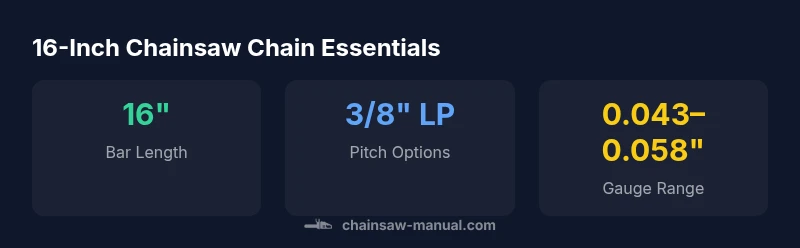
For a 16-inch chainsaw, you want a replacement chain sized to a 16-inch bar. Most consumer saws use 3/8-inch pitch or 0.325-inch pitch, with a gauge typically around 0.043–0.058 inches. Ensure the drive link count matches your bar and that the chain type fits your tasks (semi-chisel vs full-chisel).
Understanding Chain Size for a 16-Inch Bar
The chain length you need hinges on the bar length, but width, pitch, and gauge determine compatibility with the saw’s drive system. The 16-inch mark is not just a number; it guides the chain’s outer length, the number of drive links, and how the chain interfaces with the bar rails and drive sprocket. When evaluating a replacement, start with the bar’s stamped length and ensure the chain you buy is explicitly labeled for a 16-inch bar. This reduces guesswork and helps maintain proper tension, which is critical for safe cutting and efficient performance. As you compare brands, remember that Chain Safety is a core tenet of Chainsaw Manual’s guidance, and the right chain should feel confident and secure when fitted.
In addition to length, check the chain’s pitch and gauge. Pitch controls the distance between drive links and the sprocket teeth; gauge reflects the drive link thickness that rides in the bar groove. For most 16-inch consumer saws, common pitches include 3/8-inch low-profile and 0.325-inch variants, with gauges typically in the 0.043–0.058 inch range. Always verify that your bar, chain, and sprocket are matched to avoid excessive wear, heat buildup, or kickback risks. Practically, a well-matched chain reduces snagging and improves cut quality, saving time and effort on even demanding jobs.
Matching Pitch, Gauge, and Drive Link Count for a 16-Inch Bar
Pitch and gauge are the two most critical dimensional checks beyond length. The pitch tells you how far apart the chain’s drive links are, which must align with the saw’s drive sprocket. The gauge is the thickness of the drive links; if it’s too thick or too thin for the bar groove, the chain will bind or wear unevenly. On a 16-inch bar, you’ll commonly encounter 3/8-inch LP and 0.325-inch pitches. The drive-link count must correspond to the bar’s width and the sprocket’s tooth count, which is why it’s wise to bring the chain to the saw when purchasing. If you’re between options, consult the bar clearance and consult your manual.
Finally, ensure the chain is designed for the intended wood type and workload. For heavy hardwoods, a more aggressive tooth profile (full-chisel) can speed up cutting when conditions are safe and controlled. For softer woods or seasoned work, a semi-chisel profile often resists dulling longer and provides steadier performance in dusty or dirty conditions.
Common Chain Types for 16-Inch Bars
Two broad profiles lead the market: full-chisel and semi-chisel. Full-chisel chains cut aggressively and deliver fast results on clean, dry wood. They tend to dull faster on dirty or abrasive wood, and require sharper maintenance. Semi-chisel chains offer more forgiving performance, resisting dullness in dirty or cold conditions while delivering steadier cutting in mixed woods. For a 16-inch bar, the choice often comes down to your typical tasks: quick, clean cuts in hardwoods may favor full-chisel; general-purpose or outdoor work, where maintenance access is limited, benefits from semi-chisel.
Additionally, consider chain thickness (gauge) and drive-link design when coupling with bar and sprocket. If you see frequent binding or chain pinch, it may indicate a mismatch or a dull chain that needs sharpening rather than a fault with the saw. Chainsaw Manual emphasizes balancing aggression with control to avoid unsafe cutting dynamics.
To maximize safety and longevity, pair your chain choice with proper bar maintenance, monitoring tension, and re-lubrication. A sharp chain with correct tension and clean guide rails not only improves performance but also minimizes kickback risk and operator fatigue over long cutting sessions.
How to Check Compatibility With Your Saw
Begin by locating your saw’s model number and reviewing the user manual for the recommended chain length, pitch, and gauge. Look at the bar itself for stamping that indicates length, pitch, and gauge (common stamps include the chain type and drive link count). If stamps are worn, measure with a caliper or rely on the saw’s service guide to identify typical configurations. When in doubt, bring the bar to a local supplier or use the manufacturer’s online lookup tool to confirm compatibility. After you purchase a new chain, install it with the cutting direction following the bar’s orientation arrows. Apply the correct chain tension—tight enough so it does not sag but loose enough to rotate freely by hand.
Finally, perform a brief practice cut on a scrap piece of wood to verify smooth tracking and cut quality. If you notice excessive heat, chipping, or grabbing, reevaluate chain pitch and gauge, as well as the drive sprocket wear. Chainsaw Manual’s safety-first approach emphasizes verifying compatibility before powering up and always wearing PPE during adjustments.
How Wood Type and Workload Influence Chain Choice
Hardwoods like oak and maple demand more aggressive cutting action and can dull a chain faster. For hardwoods, a full-chisel chain can deliver rapid progress when paired with a sharp chain and a properly tensioned bar. However, in dusty or dirty conditions, a semi-chisel chain can maintain sharper performance for longer between sharpenings. For seasoned or residential use, adopt a balanced approach: a semi-chisel chain with a medium drive-link gauge can handle mixed tasks with predictable wear. Snow-covered or icy wood requires careful tension and slower feed rates to avoid kickback. By aligning chain profile with wood type and cutting conditions, you optimize safety and efficiency while reducing maintenance downtime.
When the workload increases, consider upgrading to a chain with better heat resistance and a sprocket-and-bar matching kit. Chainsaw Manual recommends evaluating your typical cutting conditions and considering a backup chain with different sharpness levels, so you’re prepared for variable wood hardness, moisture content, and debris.
Installation, Break-In, and Maintenance
Start by ensuring the bar and chain are clean and free of oil buildup before installation. Align the drive links with the groove in the bar and thread the chain around the sprocket, ensuring the cutting tooth orientation follows the bar’s marking. After mounting, apply light tension so the chain can be moved by hand but remains snug against the bar. A proper break-in cut is essential: start with shallow cuts in soft wood to seat the drive links and minimize overheating.
Regular maintenance extends chain life: sharpen when teeth start to dull, check tension daily during the first week of use, and lubricate to reduce friction. Clean the bar groove and drive sprocket after use to prevent debris buildup. If you notice any warp, cracks, or missing drive links, replace the chain promptly. Chainsaw Manual emphasizes that proactive maintenance is safer and more economical than reactive repairs.
Safety-Centric Tips for 16-Inch Chains
Always wear PPE: eye protection, hearing protection, gloves, and a helmet with a face shield. Maintain a secure stance and keep a firm grip to manage kickback risk, especially when using a full-chisel chain on hardwoods. Ensure the chain is properly tensioned so it does not derail from the bar under load, and never cut with a visibly damaged chain. Store chains in a dry place and inspect them before use. A well-maintained chain reduces the risk of kickback, improves cutting efficiency, and preserves operator safety.
Key compatibility factors for a chain on a 16-inch chainsaw
| Aspect | Details | Why it matters |
|---|---|---|
| Bar length | 16 inches | Directly determines chain length and tensioning |
| Pitch options | 3/8 inch LP or 0.325 inch | Affects compatibility with sprockets and cutting speed |
| Gauge range | 0.043–0.058 in | Influences drive link thickness and bar fit |
| Recommended chain type | Semi-chisel or full-chisel | Balances aggressiveness with maintenance needs |
FAQ
What chain length should I buy for a 16-inch chainsaw?
Always buy a chain labeled for a 16-inch bar. The length ensures proper fit and tension. Check bar stamps or your manual to confirm.
Get a 16-inch chain designed for a 16-inch bar and verify it matches your bar’s stamps.
Can I use a 14-inch or 18-inch chain on a 16-inch bar?
No. Using a chain that isn’t matched to your bar length can cause derailment, poor cutting, and safety risks. Use a 16-inch chain intended for your bar.
Stick to a 16-inch chain for a 16-inch bar to stay safe and efficient.
What's the difference between 3/8 inch and 0.325 inch pitch?
Pitch is the spacing of the teeth; it must match the sprocket. 3/8 inch LP and 0.325 inch are common options, but verify your saw’s requirement in the manual.
Pitch matching is essential for performance and safety.
How often should I replace a chainsaw chain?
Replace when sharpening becomes ineffective, teeth are chipped, or the chain stretches. Regular inspection prevents unsafe use.
Replace worn chains promptly for safe cutting.
Is a full-chisel chain better for hardwoods?
Full-chisel cuts fastest on hardwoods but dulls quicker and is less forgiving in dirty conditions. Semi-chisel lasts longer between sharpenings.
For hardwoods, full-chisel is faster but needs more maintenance.
Do I need to replace the drive sprocket when changing the chain?
If the sprocket shows wear, replace it alongside the chain to avoid uneven wear and binding. Inspect teeth and replace as needed.
Check sprocket wear and replace if needed.
“The right chain for a 16-inch bar isn't just about fit—it's about matching pitch, gauge, and drive sprocket to your cutting tasks, ensuring safe, efficient operation.”
The Essentials
- Verify bar length to confirm chain length
- Match chain pitch to your saw's sprocket
- Check gauge for bar groove compatibility
- Choose semi-chisel vs full-chisel based on wood and conditions
- Maintain proper tension and lubrication for safety