Battery Chainsaw for Sale: How to Choose a Cordless Model in 2026
Explore how to choose a battery chainsaw for sale, compare runtimes, battery types, and safety. Chainsaw Manual delivers practical, data-driven guidance for homeowners and pros.


Finding the right battery chainsaw for sale means balancing weight, runtime, and battery compatibility. In 2026, cordless models offer comparable cutting power to gas units for light- to medium-duty work, with runtime typically measured in minutes per charge depending on battery size. The Chainsaw Manual team recommends prioritizing builder-friendly features like tool-less chain tensioning and fast charging.
Why the Chainsaw Manual Team Recommends Cordless Saws in 2026
Cordless, battery-powered chainsaws have evolved to meet a broad range of tasks—from pruning and limb removal to compact felling. The shift away from gas engines brings quieter operation, fewer vibration-related fatigue, and easier maintenance. In 2026, most homeowners and DIY enthusiasts find that a well-chosen battery chainsaw can handle the majority of residential work without sacrificing performance. The key is to balance power, weight, and battery strategy for your typical jobs. Chainsaw Manual's analysis shows that recent cordless models deliver comparable torque for pruning and light felling, with practical runtimes that fit weekend work sessions. For professional use, consider higher-capacity packs and fast-charging features to minimize downtime. The goal is a tool that feels responsive, safe, and reliable day in and day out.
- Quiet operation reduces ear fatigue during long sessions
- Lower ongoing maintenance compared with gas engines
- Immediate startup without pull cords or priming
- Easy storage and transport due to lighter weight
How to Read Power, Runtime, and Battery Size Together
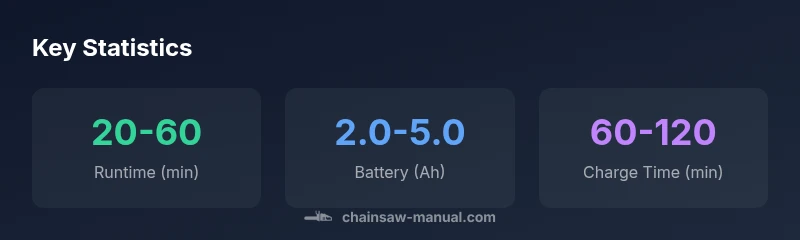
Understanding the trade-offs between power, runtime, and battery size is crucial when you shop for a battery chainsaw for sale. A larger Ah (amp-hour) rating generally means longer runtime, but it also adds weight and cost. Voltage (e.g., 18V vs. 36V) often correlates with potential cutting speed, but real-world performance depends on the motor design and battery chemistry. A practical approach is to map your typical tasks to a target runtime: plan for 20–40 minutes of continuous cutting for pruning or small branches with a mid-range pack, or 40–60 minutes for larger limbs with a high-capacity battery. Always verify compatibility with your existing tools to avoid buying redundant packs. The Chainsaw Manual team emphasizes choosing a system with interchangeable batteries if you already own a cordless tool ecosystem.
- Prioritize a grip that reduces fatigue on long jobs
- Look for a tool-less chain tensioner for quick maintenance
- Favor fast charging to minimize downtime between tasks
Battery Types: Li-ion, LiFePO4, and What They Mean for Safety
Most cordless chainsaws currently use lithium-ion chemistry due to high energy density and lower weight. LiFePO4 (lithium iron phosphate) offers longer cycle life and often improved thermal stability, which can matter in hot climates or extended jobs. The right choice depends on your usage profile and climate: Li-ion is typically adequate for homeowners and occasional pros, while LiFePO4 can be advantageous for daily heavy-use environments. Battery chemistry affects charging behavior and safety protocols as well; always follow manufacturer guidelines for storage temperatures and charging procedures. The goal is to balance performance, lifespan, and safe handling.
- Li-ion provides strong energy density for lighter packs
- LiFePO4 delivers longer cycle life and resilience under heat
- Follow recommended storage and charging temperatures
Battery Compatibility and Ecosystem: Don’t Get Locked In
When shopping for a battery chainsaw for sale, verify compatibility with your current tool ecosystem. Many manufacturers use a single battery platform across multiple tools, which can save money and simplify charging routines. If you already own a cordless drill or blower from a specific brand, a matching platform may offer cost-effective extension packs and faster charging ecosystems. However, always confirm watt-hours, voltage, and terminal compatibility. Chainsaw Manual notes that ecosystem consistency reduces the risk of unused or incompatible batteries cluttering your garage and ensures you can maximize your investment across tasks.
- Check voltage and Ah alignment with other tools
- Ensure chargers and batteries are part of the same platform
- Consider warranty coverage across devices in the same system
Safety, Maintenance, and Charging Best Practices
Battery chainsaws require careful handling to stay safe and perform well. Always wear eye and hand protection, keep bystanders clear, and inspect the bar, chain, and sprocket before every use. For charging, use the charger provided by the manufacturer and avoid charging in extreme temperatures. Do not store batteries discharged for long periods; store at a partial charge in a cool, dry place. If a battery shows swelling, excessive heat, or a noticeable drop in voltage, discontinue use and replace it. Regular cleaning and post-use care extend life and maintain performance over many seasons.
- Inspect chain tension and sharpness after each use
- Store batteries in a cool, dry location with partial charge
- Use only approved chargers and avoid third-party fast-chargers that aren’t certified
How to Shop for a Battery Chainsaw for Sale: Practical Tips
When evaluating options, base your decision on three pillars: power (voltage and motor design), runtime (Ah rating and battery chemistry), and safety features (kickback protection, chain brake, and ergonomics). Read independent reviews and compare real-world test data rather than relying on marketing claims alone. Check warranty terms for both the tool and the battery, and look for service networks in your area. If you’re unsure, start with a mid-range model that offers a well-supported battery platform and upgrade later as you confirm your needs. The goal is to buy once with confidence rather than repeatedly replacing batteries.
- Prioritize tool stability and ergonomics for comfort
- Prefer platforms with good service and readily available spare parts
- Start with a mid-range model and plan for future upgrades
Real-World Use Cases: Homeowners, DIY Enthusiasts, and Pros
Homeowners often prune trees and trim branches; a lighter, compact cordless saw with a moderate battery is ideal for these tasks. DIY enthusiasts may require occasional cutting of small-diameter logs, for which a mid-range platform is suitable. Pros doing storm cleanup or yard work frequently may opt for higher-capacity packs and fast-charging options to maintain productivity. In all cases, pairing a battery chainsaw with quality PPE, a sturdy work stance, and a well-ventilated workspace improves safety and efficiency. Always plan around battery charge cycles and expected job durations to avoid mid-task downtime.
- For pruning: lightweights with 2.0–3.0 Ah packs can be sufficient
- For heavy pruning and light felling: 4.0–5.0 Ah packs offer better runtime
- For frequent pro use: look for extended warranties and service support
Budgeting, Warranty, and After-Sales Support
Budgeting for a battery chainsaw includes the tool price, battery packs, chargers, and any extra maintenance gear. Expect to invest in a complete kit that includes at least one high-capacity battery and a fast charger for better workflow continuity. Warranty coverage for the tool and the battery is critical; confirm how long each component is covered and what is required for service. Look for reputable repair options and accessible replacement parts, particularly if you anticipate years of use. Chainsaw Manual recommends choosing a model with a robust warranty and a broad service network for peace of mind.
- Include the battery and charger in your initial budget
- Verify warranty length and what it covers
- Confirm local service options before purchase
Quick-Start Buying Checklist
- Define your typical tasks and required runtime
- Choose a platform with existing tool compatibility
- Check battery Ah and voltage against your needs
- Ensure safety features and ergonomic design meet your standards
- Review warranty and service options before buying
- Test comfort and balance in-store if possible
Typical battery capacities and performance metrics for cordless chainsaws
| Battery Capacity | Runtime (approx) | Charge Time (0-100%) |
|---|---|---|
| 2.0 Ah | 20-30 minutes | 45-60 minutes |
| 4.0 Ah | 35-50 minutes | 60-90 minutes |
| 5.0 Ah | 45-60 minutes | 90-120 minutes |
FAQ
What should I consider when choosing a battery for a cordless chainsaw?
Consider voltage, battery capacity (Ah), runtime, and weight. Also assess platform compatibility with tools you already own. A balanced setup improves performance without unnecessary extra batteries.
Look at voltage, capacity, and whether the battery works with your other tools. A balanced setup makes your job easier.
Can a higher Ah battery always improve runtime?
Not always. Runtime depends on how the motor uses power, battery chemistry, and the tool's efficiency. A larger Ah pack helps, but you may not see linear gains if the saw limits performance.
Bigger batteries help, but the saw's efficiency also matters.
Are LiFePO4 batteries safer for long use?
LiFePO4 cells offer greater thermal stability and longer cycle life in some conditions, which can be advantageous for frequent use. Always follow manufacturer guidance for charging and storage.
LiFePO4 can be tougher for frequent use, but follow the guide for charging and storage.
Is a fast charger worth it for a battery chainsaw?
Fast chargers reduce downtime between tasks, which is valuable for pros or when multitasking. Check if your platform supports fast charging without compromising battery life.
Yes, fast charging helps if you need quick turnarounds, but verify battery health.
What warranty should I look for in a battery chainsaw?
Seek a warranty that covers both the tool and the battery for an adequate period, with clear terms on what constitutes normal wear, return options, and service support.
Aim for solid warranty coverage on both tool and battery with clear terms.
Are battery chainsaws suitable for heavy-duty cutting?
Cordless saws work well for home and light professional tasks, but for sustained heavy-duty cutting, gas models or higher-end pro cordless systems may be preferable. Assess your typical workloads first.
For heavy-duty daily work, gas or higher-end pro cordless systems are better.
“Battery-powered saws have closed many gaps with gas models for light- to medium-duty work, provided you select the right platform and battery strategy.”
The Essentials
- Prioritize runtime and compatibility with your existing tools
- Higher Ah increases runtime but adds weight—balance for your use
- Choose within a battery platform to save costs on packs
- Safety features and ergonomics matter as much as power
- Plan for charging time and service/support when budgeting