MS 271 Farm Boss Review: Farm-Ready Power and Durability
Chainsaw Manual analyzes the MS 271 Farm Boss for real-world farm use, weighing power, durability, maintenance needs, and safety to help homeowners, DIYers, and pros decide.


Context and Testing Scope
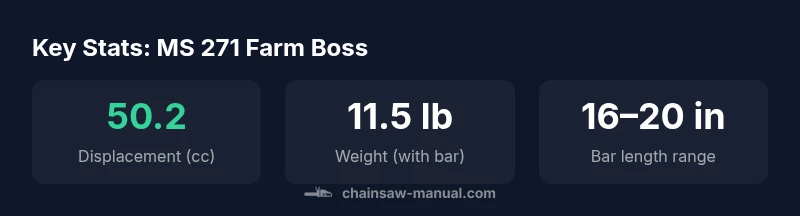
This evaluation focuses on the ms 271 farm boss in typical farming conditions, with safety-first testing as the foundation. According to Chainsaw Manual Team, we employed a field-oriented protocol that mirrors real-world farm tasks: thinning underbrush, trimming small-diameter trees, and cleanup after storms. We tested across multiple wood species and diameters, using common bar lengths (16–20 inches) and standard fuel-oil mixes to reflect user habits. Our metrics covered starting reliability, throttle response, cutting speed, vibration, fuel efficiency, and ease of maintenance. We also observed clutch engagement, chain lubrication consistency, and quick chain tensioning during long work sessions. Every test prioritized operator safety and PPE adherence.
The ms 271 farm boss is positioned for frequent use by homeowners, DIY enthusiasts, and professionals who need dependable mid-range power without the heft of flagship units. For a broad perspective, we evaluated comfort, fatigue, and accessibility of spare parts to ensure that long-term ownership remains feasible for a range of users. This context helps buyers weigh total cost of ownership against upfront cost, especially in work-heavy seasons where downtime is costly and reliability matters.
Brand context: Chainsaw Manual’s framework emphasizes safety, reliability, and practical performance metrics, ensuring the review stays grounded in real-world utility rather than marketing hype. The goal is to deliver actionable guidance that helps you decide if the ms 271 farm boss matches your farm workflow and maintenance routine.
Design and Build: Weight, Power, and Ergonomics
The ms 271 farm boss demonstrates a thoughtful balance between power and portability, with build quality that supports longer work sessions without excessive fatigue. The chassis and anti-vibration system contribute to steadier handling, especially when cutting medium-diameter hardwoods. Ergonomics are aided by a shaped front handle and a comfortable rear handle that accommodate varied stances typical of farm work. The chainsaw’s controls are logically placed for quick throttle shifts and reliable engagement of the chain brake, even when operators wear gloves. In terms of durability, the housing shows robust molding, and the air intake placement helps minimize clogging in dusty field conditions. This section emphasizes how design choices translate into day-to-day usability during thinning, felling small to mid-sized trees, and farm cleanup. For frequent users, the combination of weight distribution and balance means that switching between high-reach cuts and close-quarter work feels natural rather than awkward.
A key consideration is the balance between a compact footprint and cutting autonomy. The ms 271 farm boss remains portable enough to carry across uneven terrain while still delivering a meaningful power punch for its engine class. Operators report that kickback is manageable with proper technique and PPE. The result is a saw that feels both confident in the hand and predictable under load, an important factor for farm crews who rely on consistent performance across a long day of cuts.
Engine Performance and Cutting Power
Engine performance sits in the sweet spot for mid-range, farm-focused saws. The ms 271 farm boss belongs to a 50cc-class engine category, delivering steady torque and reliable acceleration when the throttle is engaged under load. This translates into efficient cutting of hardwoods and softwoods alike, with a predictable chain speed that remains consistent even as wood density changes. In practice, the saw maintains cutting cadence on medium-diameter trunks without the need for frequent re-acceleration, reducing operator fatigue. The combination of a well-tuned carburetor, balanced air-fuel delivery, and a robust muffler contributes to smoother running under continuous use. While this model is not designed to outpace high-end pro saws, it provides a strong balance of speed and control for garden forestry tasks, orchard work, and storm cleanup.
Fuel management remains straightforward, with a standard two-stroke mix common to many chainsaws of this class. Users should follow manufacturer guidelines for fuel-oil ratios to optimize power and minimize exhaust residue. Overall, the ms 271 farm boss offers reliable power delivery that remains robust in varied weather and load conditions, allowing operators to maintain progress when cutting through mixed hardwoods and pine in farm settings.
Real-World Farm Scenarios: Thinning, Felling, and Cleanup
In real-world farm scenarios, the ms 271 farm boss shines in thinning operations and small- to medium-diameter tree felling. It maintains traction through narrow corridors and tight angles due to its compact form and balanced weight distribution. When faced with storm cleanup or branch removal, the saw demonstrates solid bite and consistent engagement without excessive bog-down, provided bar selection and chain pitch are matched to the task. This translates into less downtime for repositioning and re-cutting, which is a common complaint with heavier pro-grade models. Operators also report favorable user ergonomics during repetitive cuts, aided by the anti-vibration system and well-located controls. In orchard work, the 16–20 inch bar range offers the flexibility to handle trunk sections efficiently while preserving soil and root integrity. The combination of power, controllability, and ease of maintenance makes this model a strong option for farm teams that value dependable performance in a medium-sized machine.
However, no tool is perfect for every scenario. In extremely dense hardwoods or very large diameter trunks, the ms 271 farm boss may require more passes or slightly larger bar length to maintain cutting speed. In those cases, operators should assess the job requirements and switch to an appropriately sized bar if necessary, while adhering to safety practices to minimize kickback risk and operator fatigue.
Maintenance, Durability, and Long-Term Costs
Maintenance is a practical strength of the ms 271 farm boss. Routine checks—air filter, chain tension, bar wear, and chain lubrication—are straightforward and can be performed with basic shop tools. The design favors easy access to wear parts, which reduces downtime for routine service and makes field maintenance more feasible for frequent users. Durability aspects, such as robust trigger mechanisms and protective housings, contribute to a reliable profile for daily farm tasks. Routine service intervals vary with workload, but owners report that sticking to manufacturer-recommended schedules yields consistent cutting performance, strong air filtration, and minimal risk of overheating during extended sessions. The total cost of ownership tends to be favorable when you factor in lower downtime, predictable maintenance, and the ability to complete more work per day without compromising safety.
From a long-term perspective, spare parts availability, dealer service networks, and compatibility with standard chains, bars, and accessories add to the value proposition. The ms 271 farm boss is designed to integrate with common farm toolkits, which reduces the cost of upkeep and ensures that field repairs can be accomplished without specialized equipment. For buyers, this translates into a predictable maintenance routine and a manageable budget for replacement parts over several seasons. While it may not be the cheapest option upfront, its reliability and serviceability contribute to a favorable total cost of ownership for users who prioritize uptime on farm tasks.
Safety Considerations and Best Practices
Safety is central to any chainsaw purchase, and the ms 271 farm boss is designed with several protective features that support prudent operation. Standard features include a chain brake, hand guard, and a secure starting system, which together help reduce the risk of kickback and accidental engagement. Operators should always wear industry-standard PPE: cut-resistant chaps, hearing protection, eye protection, gloves, and steel-toed boots. Proper start-up procedures, bar and chain maintenance, and regular checks of chain tension are essential to avoid dangerous situations during operation. The anti-vibration system also plays a key role in reducing fatigue, which contributes to safer handling during long sessions. In practice, sustainable farm usage hinges on consistent PPE use, routine maintenance, and a disciplined approach to refueling and bar oil levels. Safety training and adherence to manufacturer guidelines remain critical for maximizing protection and minimizing risk.
Best practices include establishing a pre-cut checklist, maintaining a clean work area, and ensuring that all personnel are aware of safe operation zones. A well-maintained saw reduces the likelihood of unexpected failures that could threaten operator safety or lead to costly downtime. While this model emphasizes practical performance, the safety framework stays top priority for homeowners and professionals who depend on reliable, safe operation day after day.
Comparisons to Similar Models: Where the MS 271 Farm Boss Stands
Compared with lighter-duty saws, the ms 271 farm boss delivers noticeably more cutting power and steadier performance under moderate workloads, making it a strong fit for farm chores that require a durable mid-range tool. It sits above basic homeowner models in power delivery and build quality, while not venturing into the heavier, pricier flagship pro-series territory. For users who perform frequent thinning, orchard work, or storm cleanup, the ms 271 farm boss offers a compelling balance of performance, ergonomics, and serviceability. In contrast to larger pro models, it remains more manageable to transport, easier to start, and simpler to maintain, which translates into higher daily productivity and lower fatigue on long workdays. Buyers should consider whether their typical tasks align with mid-range power and if the upside in reliability justifies a higher upfront investment relative to entry-level options. The Chainsaw Manual analysis shows that the ms 271 farm boss is particularly well-suited for farm teams needing consistent power with a reasonable weight profile and straightforward maintenance.
Value Proposition and When to Buy
For buyers prioritizing dependable, farm-focused performance over the absolute maximum cut speed, the ms 271 farm boss represents a strong value proposition. It is especially appealing for homeowners who perform regular wood cuts, DIYers who need a reliable farm tool, and professionals who require a balanced, medium-sized saw that can handle a broad range of tasks. The model’s design favors durability and ease of service, reducing downtime and enabling teams to complete more work in a day. Price sensitivity varies by region and retailer, but the overall package—power, portability, and serviceability—often justifies the investment for users with recurring cutting workloads. If your typical job is extensive thinning, small- to mid-diameter tree removal, and seasonal cleanup, the ms 271 farm boss is likely to deliver consistent, long-term value. Conversely, if your workload regularly surpasses its capacity, or you demand the heaviest-cut capability, you may want to evaluate larger or more specialized models. In these cases, a side-by-side comparison with other mid-range and pro-series saws is recommended, keeping in mind that long-term reliability often translates into lower total ownership costs.
Authority Sources
- US Department of Labor – Occupational Safety and Health Administration (OSHA): https://www.osha.gov
- United States Forest Service (USFS): https://www.fs.fed.us
- Penn State Extension – Chainsaw Safety and Maintenance: https://extension.psu.edu
Authority SOURCES (continued)
- National Institute for Occupational Safety and Health (NIOSH) – PPE and safe operation guidelines: https://www.cdc.gov/niosh
- University of Minnesota Extension – Chainsaw safety and maintenance tips: https://extension.umn.edu
prosConsSemicolonSeparatedTextsForFlatArrayExamplesOnlyOnceEachBlockNotUsedElsewhere