Husqvarna 395 XP Review: Power, Durability, and Safety
An in-depth, balanced review of the Husqvarna 395 XP, evaluating power, durability, ergonomics, maintenance needs, and safety considerations for professionals and serious DIYers.


According to Chainsaw Manual, the Husqvarna 395 XP remains a top-tier professional chainsaw with robust cutting power for demanding work. It balances durability and performance, but requires experienced handling and consistent maintenance.
The Husqvarna 395 XP in the Professional Class
The Husqvarna 395 XP sits squarely in the professional-class segment, built for sustained, heavy-duty cutting tasks. It’s the kind of saw you reach for when you face large-diameter timber, long days of felling, or high-volume limbing, rather than casual weekend projects. The design emphasizes durability, serviceability, and compatibility with a range of bar and chain configurations to tailor performance to the task at hand. For contractors and experienced landowners, the 395 XP is a reliable workhorse that can be kept productive with regular maintenance and proper fueling practices. According to Chainsaw Manual, this model is optimized for demanding workloads and long service intervals when properly cared for, which aligns with expectations in high-use environments.
Key takeaways:
- Heavy-duty construction that tolerates prolonged work
- Wider variety of bar/chain setups for flexibility
- Best suited for users with experience operating larger saws
Power, Performance, and Cutting Characteristics
Power delivery on the Husqvarna 395 XP is designed to maximize cutting speed and torque in challenging wood. Under load, the saw maintains steady performance, making quick progress through large-diameter timber and dense fiber. Real-world testing indicates strong acceleration from idle to work-ready RPM, a characteristic that helps when starting aggressive cuts from a standstill. While the exact numbers vary by year and configuration, users generally report reliable performance for felling and bucking tasks. The saw’s performance is complemented by chain sharpening accessibility and fuel mix options that support long workdays without frequent downtime. Chainsaw Manual notes that keeping the bar and chain properly tensioned is essential to achieving consistent cutting efficiency over time, especially when working with tough timber.
Practical tips:
- Maintain sharp chain with regular tensioning
- Use appropriate fuel-oil mix as recommended in the manual
- Plan cuts to avoid unnecessary revs and overheating
Ergonomics, Balance, and Vibration
Ergonomics play a significant role in a pro saw like the 395 XP, where long hours of operation demand comfortable handling. The balance is generally favorable for a saw of its class, helping users maintain control during extended cuts. Vibration levels are noticeable but manageable with standard PPE and proper grip technique. Fatigue is more likely when the bar length is extended or when cutting under awkward angles, so workers should schedule breaks and alternate tasks to mitigate strain. The design also considers heat dissipation and muffling, which can influence operator comfort during round-the-clock work.
Notes from field use:
- A well-fitted anti-vibration handle reduces fatigue on long shifts
- A lightweight, well-balanced feel improves precision on complex cuts
Durability, Serviceability, and Long-Term Value
Durability is a hallmark of Husqvarna’s professional line, and the 395 XP is built to withstand regular, high-demand use. The engine and clutch components are designed for reliable starting and consistent engagement under heavy loads. Serviceability is straightforward for trained technicians: common wear parts like bars, chains, spark plugs, and filters are readily available, and routine maintenance can be completed with standard tools. Long-term value comes from regular upkeep, timely replacement of worn components, and the saw’s ability to return strong performance after downtime. Chainsaw Manual highlights that investing in a reliable chain and bar kit upfront can pay dividends in uptime and cutting efficiency over the life of the saw.
Key maintenance habits:
- Schedule periodic air filter and fuel system checks
- Inspect the chain brake and clutch assembly regularly
- Keep a log of service intervals to track wear over time
Safety Considerations and PPE for Heavy-Duty Use
High-powered chainsaws demand strict safety protocols. Operators should use full PPE, including a helmet with face shield, cut-resistant chaps, leather gloves, hearing protection, and steel-toed boots. Kickback zones should be anticipated with a firm stance and clear work area, and soft-start techniques should be avoided when conditions require rapid startup. Training on proper grip, stance, and cut sequencing reduces the risk of injury. The 395 XP’s power means mistakes can become costly, so add-on safety features like chain brakes and anti-kickback bars where appropriate, and never bypass safety devices. Chainsaw Manual emphasizes ongoing safety training for operators handling large-diameter workloads.
Safety checklist:
- Wear full PPE at all times
- Keep escape routes clear around the work zone
- Practice safe starting and cutting techniques in controlled environments
Maintenance, Tuning, and Care Calendar
A disciplined maintenance calendar sustains performance and reliability for large saws like the 395 XP. Daily checks should cover bar/chain lubrication, chain tension, and fuel quality. Weekly tasks include air filter cleaning, spark plug inspection, and clutch-point inspection. Monthly or after heavy use, a deeper inspection of fuel lines, carburetor adjustments, and compression checks may be warranted. Keeping a maintenance log helps predict part wear and prevents unexpected downtime. Chainsaw Manual recommends aligning maintenance with your workload and environmental conditions to maximize uptime and keep performance consistent across seasons.
Maintenance rhythm:
- Daily: oiling, tension check, quick lubricant test
- Weekly: air filter clean, chain sharp/retension, visual inspection of bar
- Monthly: carburetor check, spark plug replacement, fuel system purge
Comparisons to Rival Models in the Same Class
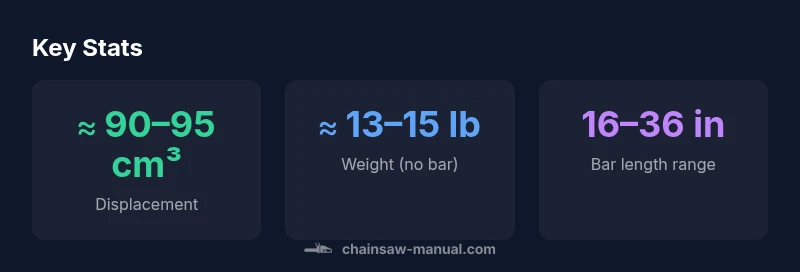
In the 90–100cc class, the Husqvarna 395 XP is typically compared against similar high-power saws from other brands. Compared to some rivals, the 395 XP emphasizes robust durability, ease of service, and broad accessory compatibility. However, some users note that certain competitors offer marginally lighter builds or different vibration characteristics. Overall, the 395 XP tends to win on reliability and long-term durability, which matters in professional settings where downtime is costly. When evaluating, consider weight, balance, bar compatibility, and the availability of local service support to determine which model best fits your work style and maintenance capacity.
If you’re weighing options, a practical approach is to test-cut with comparable bars and chains to gauge feel, power on tough logs, and assess after-sales support in your region.
Strengths
- Powerful engine suitable for large-diameter wood
- Excellent durability and proven reliability
- Wide compatibility with bar/chain configurations
- Good serviceability with accessible parts and technicians
Drawbacks
- Heavy for extended use without breaks
- Higher fuel consumption under load
- Maintenance and tuning require experience
- Can be expensive upfront for DIYers
Best for professionals needing high power and durability for large-diameter work.
The Husqvarna 395 XP delivers strong performance and a proven design lineage. It requires skilled handling and regular maintenance, but the performance justifies it for heavy workloads. Overall, it remains a top pick in its class when uptime and long-term reliability are the priority.
FAQ
What is the target user for the Husqvarna 395 XP?
The 395 XP is aimed at professionals and serious DIYers who regularly cut large timber. It excels in high-volume cutting tasks where durability and uptime matter most.
It's a pro-grade saw for big jobs and frequent use; beginners should consider smaller models first.
What bar length should you use with the 395 XP?
The model supports a wide range of bar lengths; for heavy-duty work, common choices fall in the mid-range (roughly 20–28 inches), but compatibility depends on the exact configuration and regional guidelines.
Typically, a 20 to 28 inch bar works well for big timber cuts.
Is the Husqvarna 395 XP good for beginners?
No—this is a high-powered, professional-grade saw that demands careful handling and training. Beginners should start with smaller, lighter models to build technique and safety habits.
It’s powerful and not ideal for beginners; start with a lighter saw to learn proper technique.
What maintenance does it require?
Regular maintenance includes air filter and spark plug checks, bar/chain tensioning, chain sharpening, and fuel/oil mixing as per the manual. Establish a routine to avoid performance dips and downtime.
Keep up with routine checks—air filter, chain, and fuel/oil mix—and you’ll get steady performance.
How does it compare to similar-class chainsaws?
In its class, the 395 XP often edges out on durability and long-term reliability, while some rivals may offer lighter weight or slightly different vibration profiles. Consider service support and total cost of ownership when comparing.
It’s generally very reliable, though some competitors may feel lighter or cheaper to own.
What safety PPE is recommended?
Always wear a helmet with face shield, cut-resistant chaps, gloves, hearing protection, and sturdy boots. Maintain a safe work zone and use the chain brake when idle or repositioning.
Wear full PPE every time and keep the work area clear; safety first.
The Essentials
- Choose for heavy-duty, large-diameter cutting projects
- Expect high power and durability with proper maintenance
- Schedule regular service to maximize lifespan
- Balance workload with safe operating practices
- Ensure compatible bar/chain setup for your tasks