Are Oregon chainsaw bars better than Stihl? A practical, evidence-based comparison
Objective analysis of Oregon and Stihl chainsaw bars, focusing on fit, durability, value, and safety for homeowners and professionals.


TL;DR: When you compare Oregon and Stihl bars, neither brand is universally superior; the best choice depends on your saw model, task, and maintenance. Oregon bars tend to offer broad availability and cost-effective options, while Stihl bars often deliver precise factory fit and reliable wear. Are Oregon chainsaw bars better than Stihl? Check your chain pitch, gauge, and bar length to decide.
Are Oregon chainsaw bars better than Stihl? A practical, evidence-based question
When homeowners and professionals ask, “are Oregon chainsaw bars better than Stihl,” the answer is not a simple yes or no. The most reliable guidance starts with the basics: you must match bar pitch, gauge, and length to your chain and saw. This article treats the question as a decision framework rather than a brand duel. According to Chainsaw Manual, the best bar for your saw aligns with the model’s factory specifications, maintenance routine, and the tasks you perform most often. The Chainsaw Manual team emphasizes that the overall bar performance is a function of fit, lubrication, and proper tension as much as the brand name. The goal is to minimize derailment, maximize oil delivery, and reduce rail wear over time. In practice, users frequently find that when pitch, gauge, and length are matched, Oregon and Stihl bars perform comparably for routine felling, limbing, and pruning tasks. The question remains: which wheel is more trusted for your setup? The answer depends on your specific saw, bar choice, and how you maintain both the chain and the bar.
Brand ecosystems and bar design philosophy
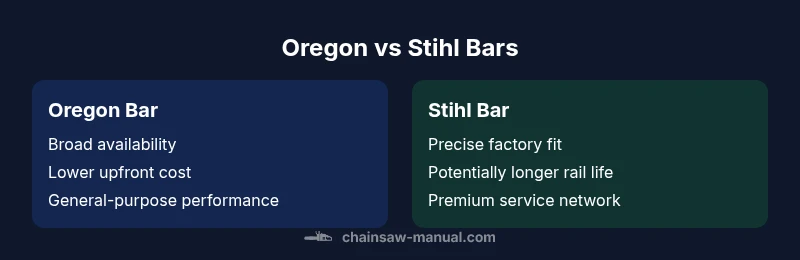
Oregon and Stihl approach bar design with distinct priorities, which matters when you’re choosing between them. Oregon bars often emphasize broad availability, value pricing, and compatibility with a wide range of aftermarket chains. They tend to offer a broad lineup of general-purpose bars, including laminated and full-skip configurations, with an eye toward cost efficiency and ease of replacement. Stihl bars, by contrast, emphasize factory-fit precision, tighter rail tolerances, and optimized wear characteristics. The design philosophy behind Stihl bars is to maximize performance with Stihl chains and saws through materials, profiling accuracy, and a robust service network. Understanding these philosophies helps you anticipate maintenance needs, rail life, and how the bar will track with your chain under load. In practice, both brands deliver reliable performance when matched to the correct model and task, but the differences show up in availability, pricing, and compatibility with specialized chains.
Key technical differences that impact performance
Several technical factors determine bar performance beyond brand names. First, pitch must match the chain; even a slightly mismatched pitch can cause short bars to derail or cause inaccurate cutting. Second, gauge indicates rail thickness; thicker rails resist bending but add weight and friction, while thinner rails reduce drag but may wear faster if abused. Third, rail profile and coating influence oiling efficiency and wear resistance. Laminated Oregon bars may offer good value with easy replacement, while Stihl bars often feature tighter tolerances and coatings designed to reduce wear under heavy use. Finally, bar length matters for reach and leverage; choose length based on the task (limbing, bucking, or felling) and your saw’s power band. Keeping these factors aligned with your chain and saw is more important than brand alone.
Durability and wear patterns across brands
Durability depends on materials, finish, and maintenance. Both Oregon and Stihl offer bars with hardened rails and protective coatings, but wear patterns can diverge based on operating conditions. In mixed-use environments—home workshops, land management, or seasonal work—the effective life of a bar hinges on oiling frequency, correct chain tension, and avoiding bar overheating. Users who rotate bars to even wear often report longer rail life, regardless of brand. It’s also essential to inspect for burrs, heat marks, and signs of bending after tough cuts. A well-maintained bar will deliver more consistent performance than a brand-based choice alone. The takeaway: good maintenance and correct matching to your chain yield the best long-term results, regardless of whether you choose Oregon or Stihl.
Compatibility and safety considerations
Compatibility is the practical gatekeeper. Even if a bar is well built, it won’t perform well if it doesn’t fit the saw’s pitch, gauge, or mounting configuration. Always verify fit against your specific saw model before purchasing. Safety considerations include proper lubrication, balanced cutting, and avoiding bar tips that have developed excessive wear. If you swap between brands, recheck tension and rail alignment after the first few cuts. For professionals, using a bar that matches the saw’s intended setup can minimize vibration, optimize oil flow, and maximize cutting efficiency. The key is to keep a consistent system: chain, bar, and saw all tuned to the same parameters.
Price, availability, and value considerations
Price and availability play a significant role in the decision. Oregon bars generally offer broad product lines at lower price points, which can be attractive for DIY users or crews needing frequent replacements. Stihl bars tend to command premium pricing, reflecting precision machining and formalized service networks. When evaluating value, consider not just upfront cost but the total cost of ownership: rail wear, oil consumption, and replacement frequency. Availability matters too; in some regions, one brand may have faster delivery or easier access to a service center. For many users, Oregon bars deliver excellent value for common tasks, while Stihl bars provide premium options for specific saws or professional environments.
Practical buying scenarios: when to pick Oregon vs Stihl
For budget-conscious homeowners, Oregon bars often provide reliable performance at lower prices with broad compatibility. For professionals who rely on precise rail tolerances and brand-wide service support, Stihl bars may deliver the most predictable results, especially on Stihl saws designed for their bars. If you frequently work in rugged conditions requiring maximum rail wear resistance, consider the premium feel and fit of Stihl bars. Always align your choice with the saw model, task type, and maintenance plan. In short, choose the brand that aligns with your equipment ecosystem and provides the best long-term value for your typical workload.
Maintenance tips to maximize bar life
A few practical steps can dramatically extend bar life. Regularly wipe away sawdust and burrs, inspect for heat damage, and rotate bars to ensure even wear. Keep the bar rails clean and lightly oil during operation to prevent dehydration and rust. Check tension after the first few cuts and periodically during use. If you notice tracking issues, inspect the drive sprocket and chain for wear, then re-check the bar’s alignment. Proper lubrication and correct chain tension reduce friction that wears rails and seals. Rotating to alternate bars during heavy use can distribute wear more evenly and extend service life.
How to select the right bar for your saw and task
Start by confirming your saw’s pitch, gauge, and mounting style in the user manual. Then map these to the most common bar options from both Oregon and Stihl, balancing price against expected wear and maintenance. Consider task variety: heavy felling may justify premium rails, while limbing and pruning might be adequately served by mid-range bars. Always verify compatibility with your chain’s pitch and gauge, and avoid forcing incompatible configurations. Finally, factor in availability of spare parts, lubrication efficiency, and replacement turnaround times. This practical approach will help you decide whether Oregon bars or Stihl bars better match your saw and work style.
Comparison
| Feature | Oregon bar | Stihl bar |
|---|---|---|
| Bar construction quality | General-use, affordable rails with standard rivets | Premium-grade rails with tighter tolerances and optimized coatings |
| Rail wear and longevity | Solid wear resistance in budget lines | Often longer wear life with precise machining and coating |
| Availability and price | Broad availability; typically lower price | Higher price; strong service network and fit |
| Best for | DIY, budget projects, frequent replacements | Pro-use, precise alignment, premium feel |
| Maintenance needs | Relatively simple upkeep; rotate bars | May require careful alignment and regular inspection |
| Compatibility notes | Check pitch/gauge; verify model fit | Designed for Stihl systems; ensure model compatibility |
Strengths
- Lower upfront cost with broad availability
- Wide aftermarket support and quick replacements
- Straightforward maintenance and swapping
Drawbacks
- Quality variance across cheaper models
- Long-term performance may favor premium brands
- Brand-specific features may limit interchangeability
Oregon bars offer best value for most users; Stihl bars excel in premium fit and durability
For the majority of homeowners and DIYers, Oregon bars deliver compelling value through broad availability and cost savings. Professionals who rely on precise fit and service networks may prefer Stihl bars, especially on compatible saws. The right choice hinges on your saw model, task mix, and maintenance discipline.
FAQ
Are Oregon bars compatible with Stihl chains and saws?
Bar compatibility depends on pitch, gauge, and mounting design. In most cases, you should not mix a bar that doesn’t match your chain and saw. Always check the saw’s manual and confirm with the retailer before swapping brands.
Compatibility varies by model; always verify pitch, gauge, and mounting before swapping bars.
Do Oregon bars wear out faster than Stihl bars?
Wear rates are task- and usage-dependent. A well-matched, properly lubricated bar from either brand can last a long time. Cheaper bars may show more wear under heavy use, but this isn’t a universal rule.
Wear depends on usage and maintenance, not just brand.
Is the price difference worth it for a professional setup?
For professional use, the decision should weigh total cost of ownership, including replacement frequency, service availability, and ride-up efficiency. Premium bars may save time and reduce downtime, potentially justifying higher upfront costs.
Consider total ownership cost, not just sticker price.
Can I use Oregon bars on a Stihl saw?
Only if the bar matches the saw’s pitch, gauge, and mounting. Otherwise, misalignment can cause poor tracking and safety risks. Stick to model-approved configurations.
Only use bars that fit your specific saw and chain.
What maintenance steps extend bar life?
Regular cleaning, proper lubrication, occasional rail smoothing, and rotating bars help extend life. Inspect for burrs and heat damage after heavy use and replace when rails show significant wear.
Clean, oil, and rotate bars to extend life.
What are common signs a bar needs replacement?
Worn or bent rails, excessive heat marks, vibration, or poor cutting performance indicate replacement may be needed. Check the bar’s alignment and replace the chain if it’s worn.
Watch for wear and heat damage to determine replacement.
The Essentials
- Match bar pitch/gauge to chain for best performance
- Oregon bars usually win on price and availability
- Stihl bars provide premium fit and service support
- Maintenance and correct mounting are critical for longevity
- Always verify saw-bar-chain compatibility before buying